10
Loading video...

By Alex J. Rouhandeh
National Political Correspondent
Share
Newsweek is a Trust Project member
See more of our trusted coverage when you search.Prefer Newsweek on Googleto see more of our trusted coverage when you search.
In the six years Jon Husted spent as Ohio’s lieutenant governor, he celebrated bringing data centers to the state as part of an economic development push that handed operators tens of millions in tax breaks. In 2025, the year Husted was tapped to fill JD Vance’s Senate seat when he became vice president, Ohio’s sales tax exemption for data centers cost the state almost $1.6 billion in foregone revenue.
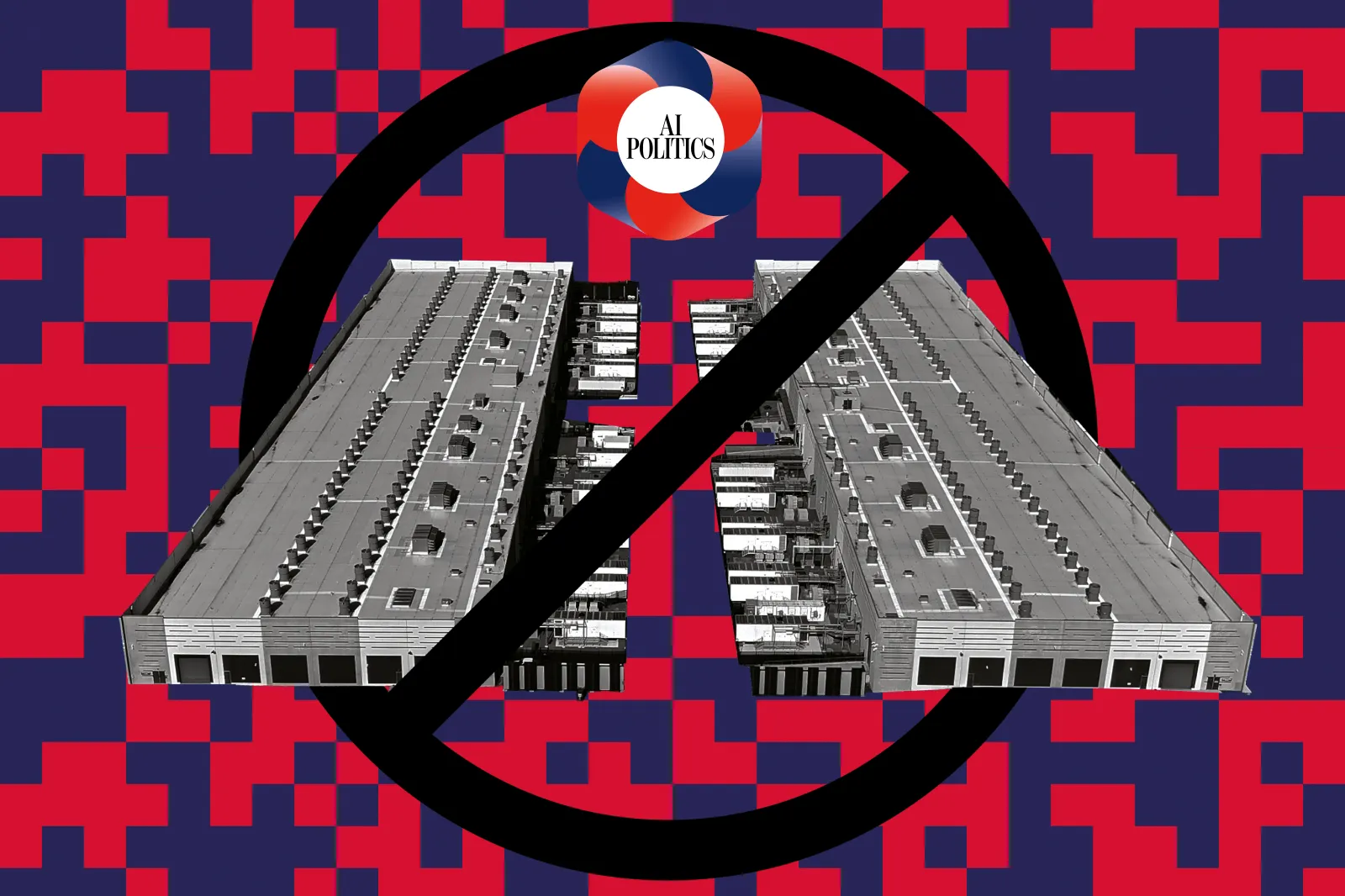
Adobe Stock
Two years ago, Husted’s record would have been regarded as a sterling Republican credential. But heading into the midterms and fighting to keep his seat, Husted is finding that record is a political liability he is trying to legislate his way out of.
Read More on AI Politics
His opponent, former Senator Sherrod Brown, has put the record Husted built at the forefront of his campaign. “Ohioans shouldn’t be forced to subsidize these costs,” Brown said, “and Ohioans—not Jon Husted and his billionaire friends—should get to decide if data centers are built in their community.”
That reversal is visible across the Republican caucus. In Newsweek’s AI Policy Scorecard, Republicans in Congress average a 3.64 Lean Booster score on Data Centers while Democrats are Lean Skeptics at 1.97—the only topic of the five scored questions where party predicts a member’s stance, unlike the scores for Safety, Jobs & Economy and National Security, where the two parties are more closely clustered together.
Much of the reason for the split on data centers is that these scores record positions taken over the past two years, a period in which the politics of data centers has changed dramatically. When Donald Trump was inaugurated in January 2025, flanked by tech leaders like Elon Musk, Mark Zuckerberg, Sundar Pichai and Jeff Bezos, Republican support for tech company buildouts was a natural fit.
Today, Trump remains one of the biggest public boosters for data centers, lending his dominance over the news cycle to their cause. “The only reason that communities throughout the U.S.A. should not want Data Centers is if they want to end up being backwards and poor. If they want to be successful and rich, with far lower taxes and jobs all over the place, let Data Reign,” Trump wrote on Truth Social in August. “If we kill the Golden Goose, you will only have yourselves to blame. China could not be happier with this anti Data Center movement.”
Related Story
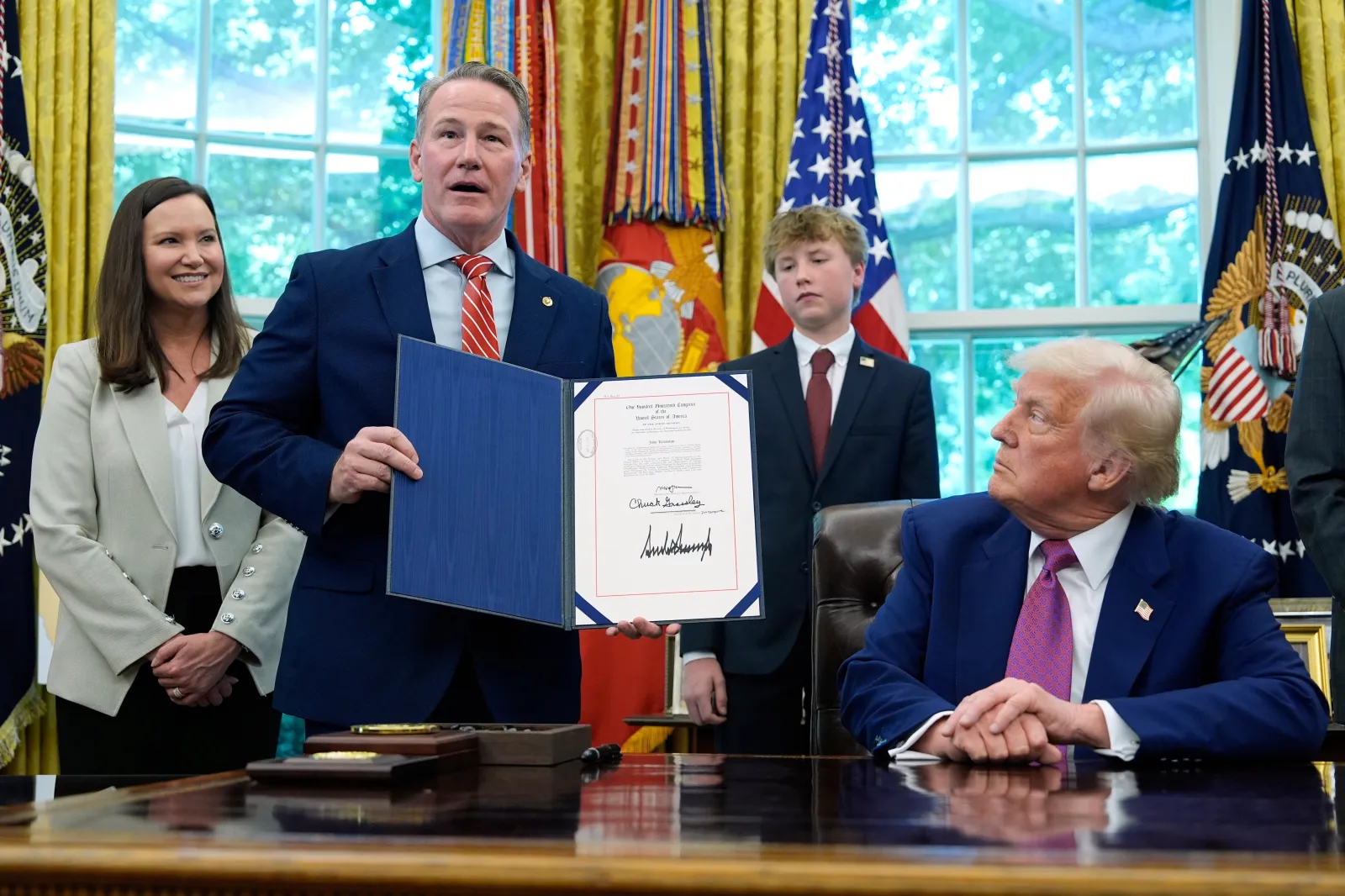
Will Trump’s Ohio Visit Rescue Jon Husted? What Polling Data Shows
Related Story
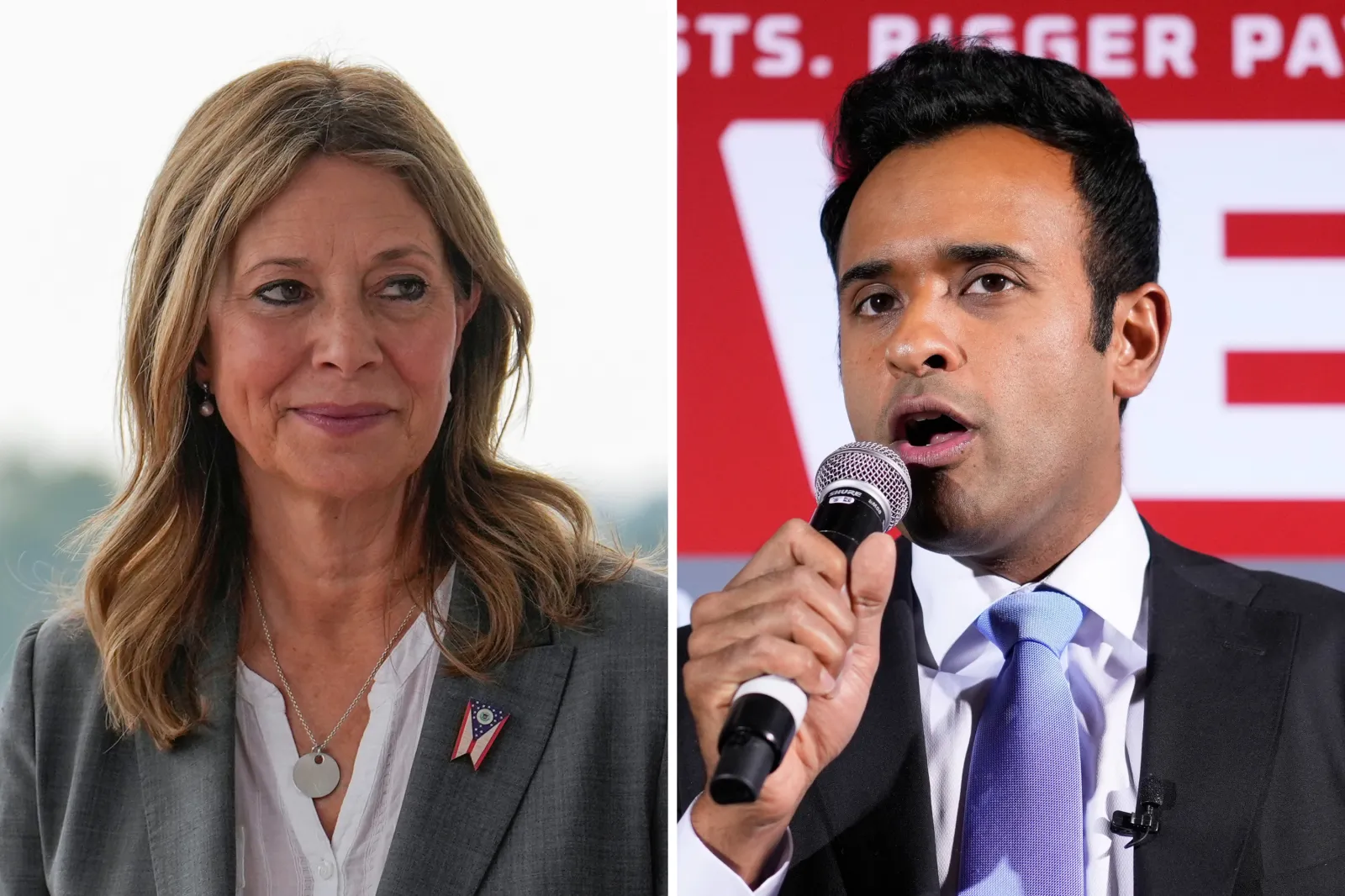
Vivek Ramaswamy Dealt Double Polling Blow Against Amy Acton Within 24 Hours
Related Story

Half of Ohio Voters ‘Strongly Disapprove’ of Trump as Brown Opens Huge Lead
But public opinion has moved the other way. In opinion polls, local opposition to data centers is broad and rising. A Gallup survey released in May found roughly seven in 10 Americans oppose the construction of an AI data center in their own community—more than oppose the idea of a nearby nuclear plant. An Annenberg Public Policy Center survey released in August put opposition to a local data center at 61 percent, 12 percentage points higher than earlier in the year, with majorities of Democrats, Republicans and independents against. It is one of the few AI questions where majorities of voters in both parties are firmly in agreement.
“Whether you come at this from the existential risk, geopolitical concerns, labor force impacts or the actual economics and climate and energy issues related to data centers, it is the physical manifestation of AI,” Nathaniel Persily, who researches AI at Stanford Law School, told Newsweek. “It is literally a concrete building where you can then channel your anxieties and frustrations.”
Congressional Republicans have demonstrated an awareness of their vulnerabilities on this issue. In the House, Republicans rallied around the Ratepayer Protection Act, which aims to prevent consumers and small businesses from footing the bill for electrical grid upgrades required by AI data centers. Democrats overwhelmingly joined them when the bill passed September 16 with a 417-3 vote. Before it becomes law, however, the bill must pass the Senate, where it is stalled.
The senator who first introduced the measure in the chamber? Jon Husted of Ohio. The day after the bill passed the House, he took to the floor to urge the Senate to pass it by unanimous consent. “I am responding to what the voters want. They want the data centers to be held accountable for the costs of new electricity and infrastructure. And my bill does that,” he told Newsweek.
But the move was blocked by Senator Martin Heinrich, a Democrat from New Mexico, who said he doesn’t think it goes far enough. “Rather than voluntary pledges or suggestions to states, Congress needs to pass real legislation, with real teeth,” Heinrich said, urging passage of his own bill. That measure, the GRID Savings Act, would require large data center operators and other industrial users to finance the grid infrastructure they need, instead of asking states to consider it. “If hyperscalers and other Big Tech developers need expensive new facilities and more energy, they should pay for it,” he said.
The bill’s fate now sits at the intersection of two campaigns. Husted, who says he’s always believed data center development should be a local decision, needs a record of data center skepticism he can point to. But Heinrich and other Democrats have no reason to hand vulnerable Republican incumbents an accomplishment ahead of November 3. “Democrats proved that they’re more interested in playing politics than they are at responding to the needs of the American people. They don’t really care about affordability when it comes to electricity and data centers. They care about having a political issue. And so they own it now,” Husted said.
Ultimately, what neither party is offering is a way to stop the buildout. In Ohio, 78 percent of residents favor a moratorium on new data center construction while more information can be gathered, per a Bowling Green State University poll. Husted doesn’t support one. Neither does Brown, who promises instead to make operators pay their full electricity costs, protect water supplies and give communities a say in approvals. However, according to the Ohio Capital Journal, at least 138 Ohio communities have put active data center moratoriums on their books.
That is also why the issue travels so well. Wider grievances against tech companies have until recently had nowhere to go. Data centers made them visible: a windowless building on the edge of town, a transmission line, a tax abatement the county already approved.
Husted's arc is the whole shift in miniature: a lieutenant governor who cut the deals is now the senator asking his colleagues to protect voters from the bills those deals helped run up. He is not alone in the correction, only earlier and more exposed than most. Whether he corrected course fast enough is a question Republicans everywhere will see answered on November 3.

Illustration by Gregori Saavedra for Newsweek
Submit Correction
View Editorial & AI Guidelines