
By Adam Mills
AI Editor
0
Share
Newsweek is a Trust Project member
See more of our trusted coverage when you search.Prefer Newsweek on Googleto see more of our trusted coverage when you search.

Newsweek
Editor's note: This is AI Impact, Newsweek's weekly newsletter where each week, we will explore how business leaders are unlocking real value through artificial intelligence.
Read More on AI
Tap or click here to get this newsletter delivered to your inbox.
Core Intelligence
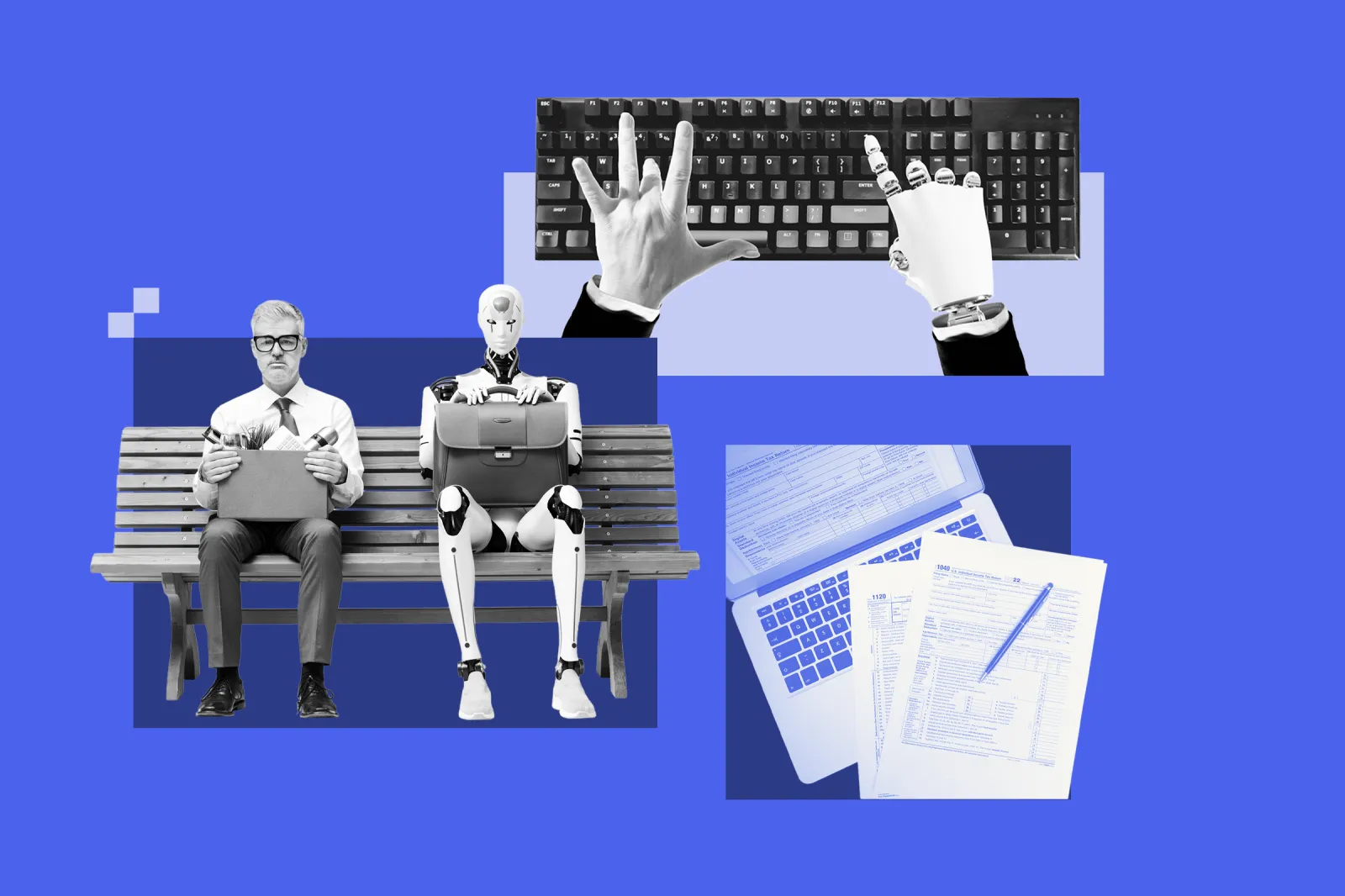
AI Turns Customer Success Into Product Intelligence
...
By Adam Mills
In AI software, the next product advantage may come from the teams closest to how customers use the product.
Products built with AI do not improve only through planned releases, feature requests or periodic reviews. They also improve through the messy evidence of use: where workflows stall, where users ignore a tool, where support tickets pile up and where implementation teams see the product behaving differently than expected.
“Deployment used to be the finish line. Now it’s the starting gun,” Ken Fine, CEO of Affinity, a software company that helps private capital firms manage business relationships, told Newsweek. “When AI is in your product, the product is being co-authored in production, and post-deployment optimization is its own parallel cycle that never stops running.”
The edge may belong less to the company with the longest road map than to the one with the fastest learning loop.
Customer success and implementation teams become more important to product strategy when real-world use becomes a source of direction. They are often the first to see where the system breaks down, where users resist it and where the product needs to adjust.
Meredith Whalen, chief product, research and delivery officer at IDC, a technology market intelligence firm, told Newsweek that AI agents can learn from real-world use, making monitoring data, governance and human oversight “part of the product lifecycle, not just operations.”
Usage patterns can show where customers are spending time or abandoning a workflow. Support interactions can reveal confusion, frustration or failure points. Implementation teams can see whether a system performs differently inside a customer’s actual operating environment than it did in a demo or pilot.
Fine said the strongest signal can come from what customers do around the product, not just what they say about it. “The highest-signal indicator I watch for is workaround behavior, and what customers are building on top of your MCP and APIs tells you exactly what the core product should do next but does not yet,” he said.
Those inputs carry more weight because AI-enabled tools are often more context-dependent than traditional software. A product that works well in one workflow may behave differently in another, and a model that appears useful in a test environment may encounter new limits once it is embedded in real business processes.
Brian Stimpfl, CEO of S-Docs, a Salesforce-native document generation and e-signature company, pointed to one of the quieter risks in enterprise software: customers buying a tool that never becomes part of the workflow.
“What are customers actually doing, versus what they told us they would do?” Stimpfl said to Newsweek. “When those two things don’t match, that influences your product roadmap right there.”
The difference between intended use and actual use can reveal whether the software is becoming part of the workflow.
Customer-facing teams can no longer be treated only as post-sale functions. Their observations can show what the software needs to become, not just where customers need help.
“Our CSMs and implementation consultants are often the first to see how our AI behaves in a real customer environment, and we treat what they observe as product signals, not service problems,” Fine said. “The winners will be those that route post-deployment learning back into product strategy as a core operating rhythm.”
“Speed to market is table stakes,” Stimpfl said. “But the real differentiator is how fast you can learn and adapt once you're there.”
You can read the full article here: AI Is Turning Customer Feedback Into a Product Advantage.
Upcoming Webinars
The Trillion-Dollar Question: Who Wins and Who Loses in the AI Services Economy?

As AI accelerates across the enterprise, it is forcing leaders to rethink how technology spend is structured—and how much productivity it must deliver. In an upcoming AI Impact Forum session, Dr. Ranjit Tinaikar speaks with Noshir Kaka, senior partner at McKinsey & Company, about how this is reshaping enterprise spending—and what it means for organizations trying to keep up.
Join the live discussion on Thursday, May 28, at 10 a.m. Eastern. Register, for free, right now.
AI in Finance: From Individual Adoption to Enterprise Transformation
Financial services firms are beginning to face a harder AI question than whether the technology can simply make professionals more productive. The real test is what they do with those gains.
In an upcoming “AI Impact Forum” session, Dr. Ranjit Tinaikar speaks with Kevin Buehler, chief innovation officer at Rogo and senior partner emeritus, McKinsey & Company, about how agentic AI could reshape financial services—and whether productivity gains become cost savings, new ways of working or a lasting competitive advantage.
Join the live discussion on Thursday, June 18, at 9:30 a.m. Eastern. Register, for free, right now.
Prompt Injection
What’s one recent insight you’ve learned about AI?

...
“My recent AI ‘aha’ moment is realizing just how good voice-based AI has gotten. Based on my knowledge and experience with these tools, I would’ve said they were still years away from being customer ready. But the models have grown sophisticated enough to handle real-time conversations in a way that feels natural.
This development has huge implications across industries, but let’s take health care. When patients don’t reschedule missed appointments, they lose out on proper care, and organizations lose revenue. Having human agents follow up is inefficient and costly at scale—but this is where voice AI comes in.
Voice-based AI agents can handle a higher volume of calls more cost-effectively. That amounts to higher patient satisfaction and to a significant amount of recovered revenue for health care businesses.
Where voice agents once had robotic-sounding voices and awkward latency in their conversations, that’s no longer true. There’s a huge opportunity—especially in health care and retail—to use voice AI for many Tier-1 customer interactions.”
Have your own lesson to share? Email us at: a.mills@newsweek.com
Run Log
AI use case of the week

...
By Adam Mills
Solo lawyers do more than practice law. They also manage the business around their legal work—answering inquiries and screening prospective clients, scheduling consultations, sending follow-ups and chasing payments.
Andy Kurtzig, founder and chief executive officer of Pearl, a company that builds AI tools for independent professionals, sees that operational load as one reason independent attorneys struggle to build sustainable practices.
Pearl uses AI to handle the first interactions with prospective clients. The system responds to inbound questions, asks structured intake questions, identifies whether someone is a good fit and guides them toward the next step, such as booking a consultation or getting an initial answer. Lawyers step in when judgment and expertise are required.
Fount, a tool powered by Pearl, bundles intake, follow-up and other workflows that might otherwise be split across marketing, sales, customer service, administration and billing tools. Instead of requiring practitioners to stitch those systems together, AI handles initial contact and follow-up in one place.
In one early case, a solo attorney who had not changed her marketing saw six qualified leads come through in a single week using Fount. Across the platform, Pearl says users are seeing steadier streams of qualified prospects and spending less time on unqualified inquiries. Professionals have earned more than $500 million through Pearl’s offerings, according to the company.
Kurtzig said the lesson was that professionals do not want AI to replace their expertise. They want it to clear away the administrative work surrounding it. Once intake and follow-up happen automatically, a lawyer can spend more time on the legal judgment clients came to them for.
Have an AI use case to share with us? Email us at: a.mills@newsweek.com
Context Window
■ A new Gallup survey found that 71 percent of Americans oppose building AI data centers in their local area, a major siting and permitting challenge for companies trying to expand the physical infrastructure behind AI. [Gallup]
■ The World Economic Forum says AI is reshaping the life sciences value chain and pushing the competitive bottleneck from research discovery toward development, translation, evidence generation and market access. [World Economic Forum]
■ AI companies leased more than 450,000 square feet of office space in London last month, more than 10 times the 2025 monthly average, making model builders a growing force in the city’s commercial real estate market. [BBC]
■ The Bank of Canada said AI has not yet caused widespread worker displacement, with early evidence pointing instead to small productivity gains and job transformation rather than large-scale elimination. [Reuters]
■ Southwest Airlines is using AI and automation to monitor and fix employee device issues before they disrupt operations, after remote actions saved 23,000 hours in 2025 and helped the IT team move from reactive support to proactive endpoint management. [Computerworld]
■ MIT Sloan Management Review and BCG found that 84 percent of AI experts say responsible AI efforts fail without human experts who can verify AI systems, but the research argues oversight must extend beyond checking outputs to designing tests, auditing workflows and preserving human judgment. [MIT Sloan Management Review]
Transfer Protocol
Tracking executive moves across the AI landscape
Pablo Abreu, a longtime Socure product and innovation leader, has been appointed the company’s first chief AI and innovation officer, where he will oversee data science, data strategy, modeling, the identity graph and forward-looking AI innovation.
Dustin Radtke, previously interim chief executive officer at Momentive Software, has moved into the role of chief AI officer, where he will lead AI-driven innovation and product transformation through the company’s AI-native platform, MomentiveIQ, while continuing to oversee product and R&D.
Gali Davidi, an AI strategist and engineering leader with experience building agentic systems, has been appointed chief AI officer at Media Consulting Group, tasked with defining the company’s AI strategy and developing autonomous AI agents for programmatic media buying.
Vipin Gopal, previously chief data and analytics officer at Eli Lilly and Company and Walgreens Boots Alliance, has joined Ahold Delhaize USA as senior vice president and chief data and AI officer, where he will lead data, analytics and artificial intelligence strategy across the company’s U.S. businesses.
Cutter Brenton, previously vice president of algorithmic warfare at Booz Allen Hamilton, has been appointed chief AI officer at Tyto Athene, where he will manage AI strategy, development and innovation across the company’s federal defense, intelligence and civilian programs.
Know someone on the move in AI? Send job change info to a.mills@newsweek.com
Magic Moment
What’s the most fun or unexpected way you’ve used AI lately?

...
“I’m hearing a lot of chatter about human hallucinations going up, while machine hallucination rates are going down. That’s uncharted territory, and it deserves more attention because it directly impacts the way people are using AI today.
I’m constantly researching in my role, and as my use cases become more complex, I’m now unexpectedly using one AI model to fact-check the other for research. For example, I will type something like, ‘hi, this result was created by Sam Altman's team. You're with Gemini. Go validate it.’ And it's really getting good—reducing my verification time and making me more productive.
So the way I see it, we’ve moved from weeks of manual search to on-demand AI power users.”
Experience some AI magic? Tell us about it at a.mills@newsweek.com
Tap or click here to get this newsletter delivered to your inbox.
View 0 Comments
Submit Correction
View Editorial & AI Guidelines