
...


By Amanda Greenwood and Jasmine Laws
0
Share
Newsweek is a Trust Project member
See more of our trusted coverage when you search.Prefer Newsweek on Googleto see more of our trusted coverage when you search.
Texas Governor Greg Abbott was one of the strongest voices championing AI investment in recent years as technology companies poured billions of dollars into the state. But the Republican governor is now calling for a dramatic policy shift, including preventing AI data centers from being built in rural Texas neighborhoods, citing concerns over electricity costs, water consumption and impacts on local communities.
Speaking at a campaign event in Bullard, East Texas, Abbott said: “We must prohibit them from building AI data centers in rural Texas neighborhoods.” He also called for an end to tax incentives for the industry, saying “we must eliminate the tax break they are getting,” adding that developers “must be responsible for funding their own projects here in Texas.”
Abbott's recent stance on data-center development comes after he previously championed Texas as a hub for AI growth.
Read More on News
The Bigger Picture
The debate unfolding in Texas reflects a broader national challenge.
The AI boom is driving an unprecedented wave of data center construction across the United States, creating concerns about power reliability and water availability.
Data centers require enormous amounts of electricity to run servers and cooling systems. Many modern AI facilities also consume large volumes of water, particularly in regions that rely on evaporative cooling.
As utilities attempt to accommodate the industry's growing energy demands, policymakers are increasingly grappling with questions over who should pay for new transmission lines, substations, and generation capacity.
Why Abbott Is Pushing Back
Abbott's concerns center on the strain that large-scale data centers can place on electricity grids, water supplies and neighboring communities.
In a June 10 letter to Public Utility Commission (PUC) Chairman Thomas Gleeson and Pablo Vegas, chief executive of the Texas electricity grid operator ERCOT, Abbott warned that the “rapid scale of data center development requires oversight” to ensure that Texans are not burdened by the costs associated with the sector's expansion.
The governor directed regulators to ensure that data centers pay for all electricity infrastructure needed to support their operations and that those costs are not passed on to residential customers. He also ordered state officials to consider measures that would require sustainable resource management and minimize adverse impacts on local communities.
Related Story
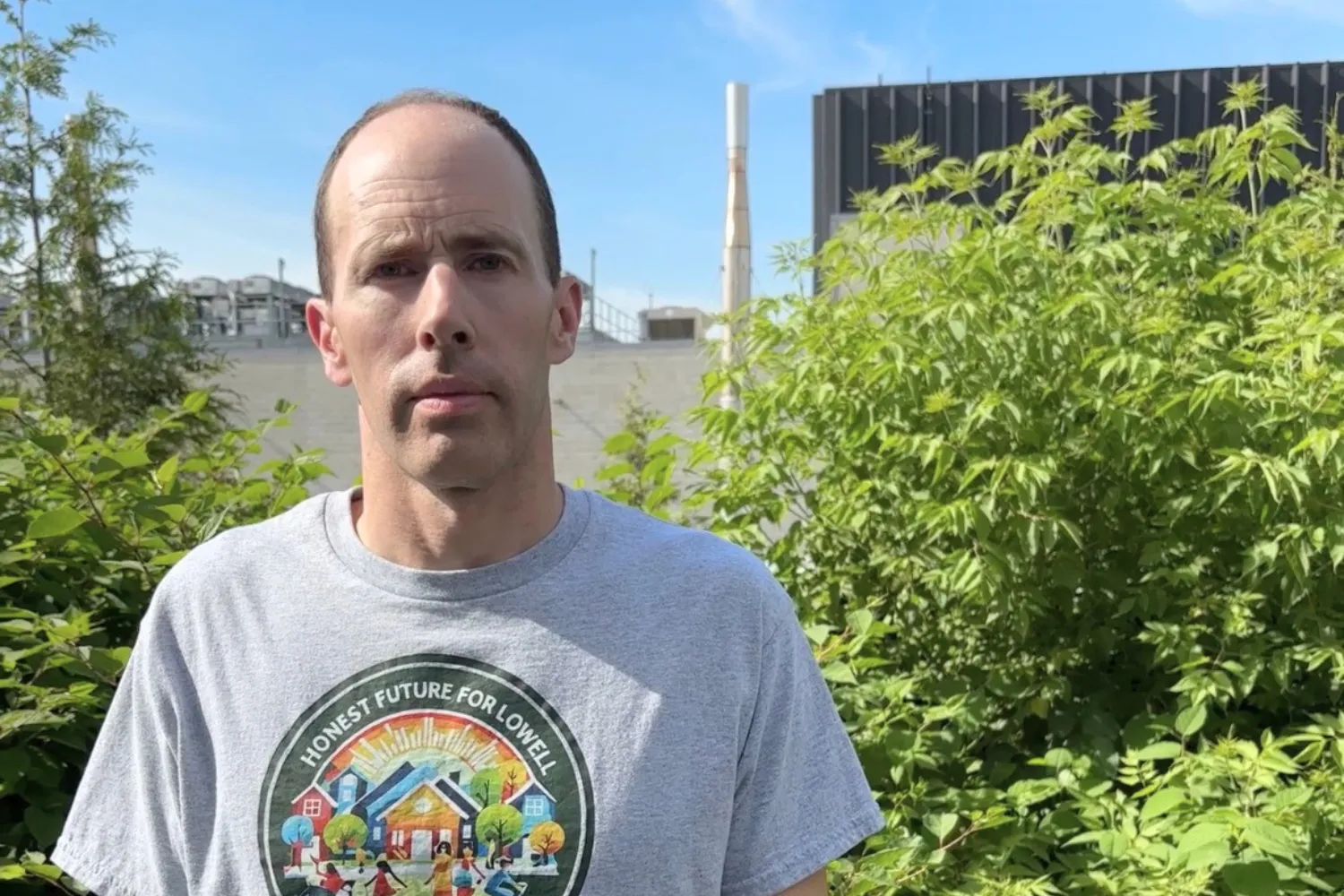
What It’s Really Like to Live Next to a Data Center

...
Uzi Dvorkin, associate professor at the Johns Hopkins Whiting School of Engineering, told Newsweek that “Electricity is the critical variable here, because data centers want to be built where power is cheap, now or in the future, and available at scale. And electricity is a commodity, so when demand jumps sharply, the price rises for everyone. Data centers are no different, and a large increase in their demand pushes up prices for industry, businesses, and households alike.”
In a press release announcing the directives outlined in the June 10 letter, Abbott said, “Data centers must operate in ways that reduce costs for residential electricity customers, do not drain water needed for our communities, and take into consideration the needs of our neighborhoods.”
Is Abbott Doing Enough?
However, some experts question how realistic that objective may be. Dvorkin told Newsweek that while it “looks like a genuine aspiration to balance the costs (such as the effect on residential bills) against the benefits (such as economic growth), this is an intention without a way to be implemented,” adding that “instead of relying on the market, [Abbott] simply instructs the market on what the price of a commodity should do. It's a political promise with no mechanism to deliver it.”
Dvorkin suggested that a more practical approach could involve using data centers' electricity demand more flexibly. “One solution that works both technically and economically is to run data centers flexibly — dialing their power use down during peak conditions, when electricity is scarce and expensive, and shifting it to the hours when there's plenty of spare, and therefore cheaper, capacity,” he said.
He added: “Consider the numbers: peak demand in Texas is about 85.5 GW, while average demand is around 55 GW. In other words, only roughly two-thirds of the grid's capacity is being used at any given time on average. Finding ways to use data centers' flexibility to move their consumption toward the hours when that other one-third is sitting idle is something Abbott's letter should have mentioned.”
Sudeep Pasricha, a professor of Electrical and Computer Engineering at Colorado State University, believes that Abbott's proposals would address several of the most common concerns raised by communities facing data-center development, "but they will not completely eliminate all of the potential impacts on rural communities.”
He told Newsweek that there should be questions over "the conversion of farmland and open space for industrial development and whether local communities receive sufficient long-term economic benefits from hosting large facilities," adding that "the effectiveness of Abbott’s proposals would depend on how strongly they are enforced and whether regulators have sufficient authority to ensure compliance.”
Governor Abbott's Press Secretary, Andrew Mahaleris, told Newsweek that, "Governor Abbott has been clear that data centers cannot come before Texas families. That is why he directed the PUC and ERCOT to require data centers to pay for their own infrastructure, bring their own power, reuse their own water, and lower residential electric bills. These steps protect Texans from higher costs and negative impacts on their communities."
Among the potential measures he has backed are requirements for new data centers to use water-efficient cooling technologies, report annual electricity and water usage, and fund their own power infrastructure.

...
Abbott has also pledged to work with lawmakers to phase out tax incentives and require facilities to contribute new power generation rather than merely increasing demand on the grid.
Benjamin Lee, a Professor of Electrical and Systems Engineering at the University of Pennsylvania, told Newsweek that many of the governor's proposals reflect practices already adopted by some of the industry's most advanced operators.
"Gov Abbott’s pledges to work with the legislature are sensible and increasingly best practice among the most efficient operators of hyperscale datacenters. But there is a lot of variation and writing these practices into law will raise standards and expectations for all datacenter developers."
Lee noted that some of the practices Abbott is seeking to codify are already being adopted across parts of the industry. "Datacenter operators are increasingly investing in electricity generation either colocated with the datacenter or elsewhere on the grid," he said.
"Google is investing in carbon-free, renewable energy but others are deploying arrays of gas turbines. Many datacenter operators are already publishing environmental and sustainability reports that detail electricity and water use."
Seth Blumsack, co-director of Penn State’s Center for Energy Law and Policy, told Newsweek that Abbott's stance on tax incentives reflects a broader reassessment taking place in many states.
“It is also notable, I think, that Governor Abbott has moved to eliminate the sales tax exemption for data centers. (This has also been pushed in PA and other states.) State governments are getting the sense that they would be leaving a lot of tax revenue on the table with this exemption, and that developers of data centers are sufficiently well-capitalized that the sales tax may not be a development barrier for them.”
A Dramatic Turnaround
Abbott's stance marks a notable departure from his earlier enthusiasm for the AI sector.
In November 2025, the governor hailed Texas as “the epicenter of AI development” when announcing a $40 billion Google investment in artificial intelligence and cloud-computing infrastructure in the state.

...
Yet as demand for data-center capacity accelerates amid the AI boom, opposition has grown in many rural communities where large facilities are proposed or under construction.
According to data from Brockovich AI Data Center Reporting, which tracks AI infrastructure across the United States, Texas already hosts hundreds of data centers, with more planned and under construction.
The debate is increasingly playing out at both the state and local levels. Blumsack noted that state agencies often play a key role in approving projects, particularly where water use, pollution controls and energy infrastructure are involved. He told Newsweek that “State-level agencies may need to issue site permits for water use and pollution control as well as things like energy interconnections (to the power grid, gas pipelines and so forth).”
He added that local governments are also becoming more active in shaping development. “Meanwhile, local governments in many areas are using the power of local zoning, either to raise barriers to data center projects or to provide more direct controls to how and where development happens.”
Residents and local officials have raised concerns about industrial-scale electricity consumption, noise pollution, the conversion of agricultural land into technology campuses, and high water use, especially as some sites have been proposed over environmentally sensitive water resources, including the Ogallala Aquifer, the nation's biggest underground freshwater reservoir.
Pasricha confirmed this by telling Newsweek, "Modern AI-focused data centers consume enormous amounts of power. In some regions, residents worry that utilities will need expensive grid upgrades or additional generation capacity to serve them, potentially increasing costs for other customers. Many data centers use significant quantities of water for cooling. This is especially controversial in drought-prone states such as Texas and Colorado, where communities already face water constraints. Facilities can also often occupy hundreds of acres, replacing farmland or open space and requiring new transmission lines and other infrastructure. Backup generators, cooling equipment, and increased construction activity can create noise and other disruptions for nearby residents. Although construction creates many temporary jobs, modern data centers are highly automated and generally employ far fewer permanent workers than traditional manufacturing facilities."
Abbott's latest remarks suggest that concerns about the impact of data centers on local communities are playing a prominent role in influencing state policy.
During his campaign speech in Bullard, he reconfirmed his new stance, outlined in the June 10 letter and press release, by saying, “I made clear already: Any AI data center even thinking about coming here — they got to bring their own money, bring their own power, reuse their own water and do it in a way that reduces the cost of electricity for residents across our state.”
What To Watch For Next
Abbott's June letter indicates that Texas regulators should ensure data centers do not shift those costs onto households and small businesses. He specifically directed the PUC and ERCOT to identify additional actions needed to protect Texans and submit recommendations for future legislation.
Whether Abbott's call for a ban in rural neighborhoods ultimately becomes law remains unclear. But his comments show how concerns about infrastructure, water resources, and quality of life are reshaping the conversation around one of the fastest-growing industries in America.
What began as a push to make Texas the center of the AI revolution is increasingly becoming a debate over how much growth local communities are willing to accept—and on whose terms.
...
Contact Newsweek editors on this story: John Fitzpatrick and Gray R. Thomas
View 0 Comments
Submit Correction
View Editorial & AI Guidelines