
...

By Sam Stevenson
Associate News Editor
0
Share
Newsweek is a Trust Project member
See more of our trusted coverage when you search.Prefer Newsweek on Googleto see more of our trusted coverage when you search.
An abandoned amusement park in West Virginia, described by the Mercer County Convention and Visitors Bureau as "one of the world's most haunted places," sits on land shaped by violence, tragedy and decades of local folklore.
Why It Matters
Lake Shawnee Amusement Park has become a national curiosity. Its story, which blends documented history with persistent legend, reflects how places tied to real tragedy can take on a second life through folklore and tourism.
Read More on Travel
...
What To Know
Lake Shawnee Amusement Park, located in Mercer County near the town of Rock, has been closed for decades.
Once a popular summer destination for families, it is now best known for its reputation as a haunted site shaped by generations of tragedy along the Bluestone River.
Over time, the abandoned rides and overgrown grounds became a focal point for ghost stories and paranormal-themed tourism.
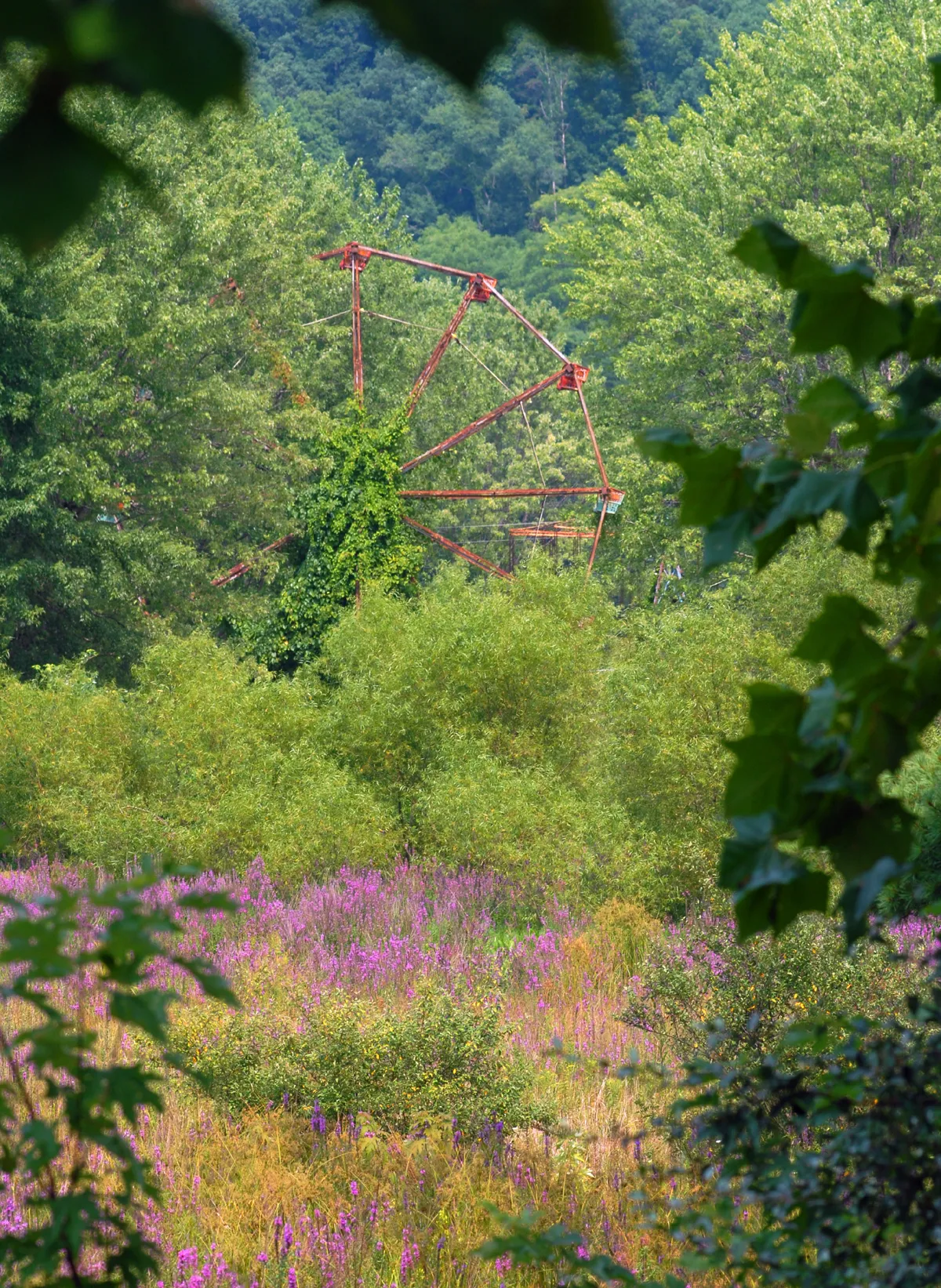
Today, the rusting Ferris wheel and swing set remain standing, surrounded by vegetation and the remains of ticket booths and pathways.
Visits to the site are typically limited to guided tours arranged in advance.
According to historical records, the park originally opened in 1926 as a family-oriented attraction serving nearby coal-mining communities.
Before any rides were built, however, the land had a far older history.
...
Multiple sources document that the site was the location of a violent frontier-era attack in 1783 involving the family of settler Mitchell Clay.
During that incident, three of Clay's children were killed or captured during a raid attributed to a group of Shawnee Native Americans.
Entrepreneur Conley Trigg Snidow Sr. later purchased the property and developed it into an amusement park.
According to historical accounts, the park featured a Ferris wheel, swing rides, a swimming area, a dance hall, concession stands and cabins for overnight stays.
For many local families, Lake Shawnee was remembered as a popular summer destination rather than a place of fear.
That reputation began to change after a series of fatal accidents occurred during the park's operation.
According to reports, two drowning deaths occurred on the property, along with the death of a young girl who was struck by a delivery truck while riding the park's swing ride.
The park ultimately failed a health inspection and closed in the late 1960s.
After sitting unused for years, the property changed hands again in the 1980s.
Gaylord White, a former park employee, briefly reopened the site in 1987, but rising insurance costs forced it to shut down permanently in 1988.
In the early 1990s, archaeological work conducted by researchers from Marshall University uncovered Native American artifacts and burial remains on the property.
Thirteen skeletons, mostly of elderly individuals and children, were documented during the excavation, according to historical summaries.
That discovery added another documented layer to the site's history and helped fuel its reputation as a place tied to unresolved tragedy.
What People Are Saying
Mercer County Convention and Visitors Bureau said on its website: "Known as 'one of the world's most haunted places,' Lake Shawnee Abandoned Amusement Park is a place where mystery hangs in the air. Stories passed down by word of mouth recall a frontier-era tragedy, an ancient burial ground and an eerie amusement park left behind. The site draws historians and curious minds alike, all wondering what truths lie within the folklore. You'll have to see for yourself."
In a polarized era, the center is dismissed as bland. At Newsweek, ours is different: The Courageous Center—it's not "both sides," it's sharp, challenging and alive with ideas. We follow facts, not factions. If that sounds like the kind of journalism you want to see thrive, we need you.
When you become a Newsweek Member, you support a mission to keep the center strong and vibrant. Members enjoy: Ad-free browsing, exclusive content and editor conversations. Help keep the center courageous. Join today.


View 0 Comments
Submit Correction
View Editorial & AI Guidelines