...

By David Averre
0
Share
Newsweek is a Trust Project member
See more of our trusted coverage when you search.Prefer Newsweek on Googleto see more of our trusted coverage when you search.
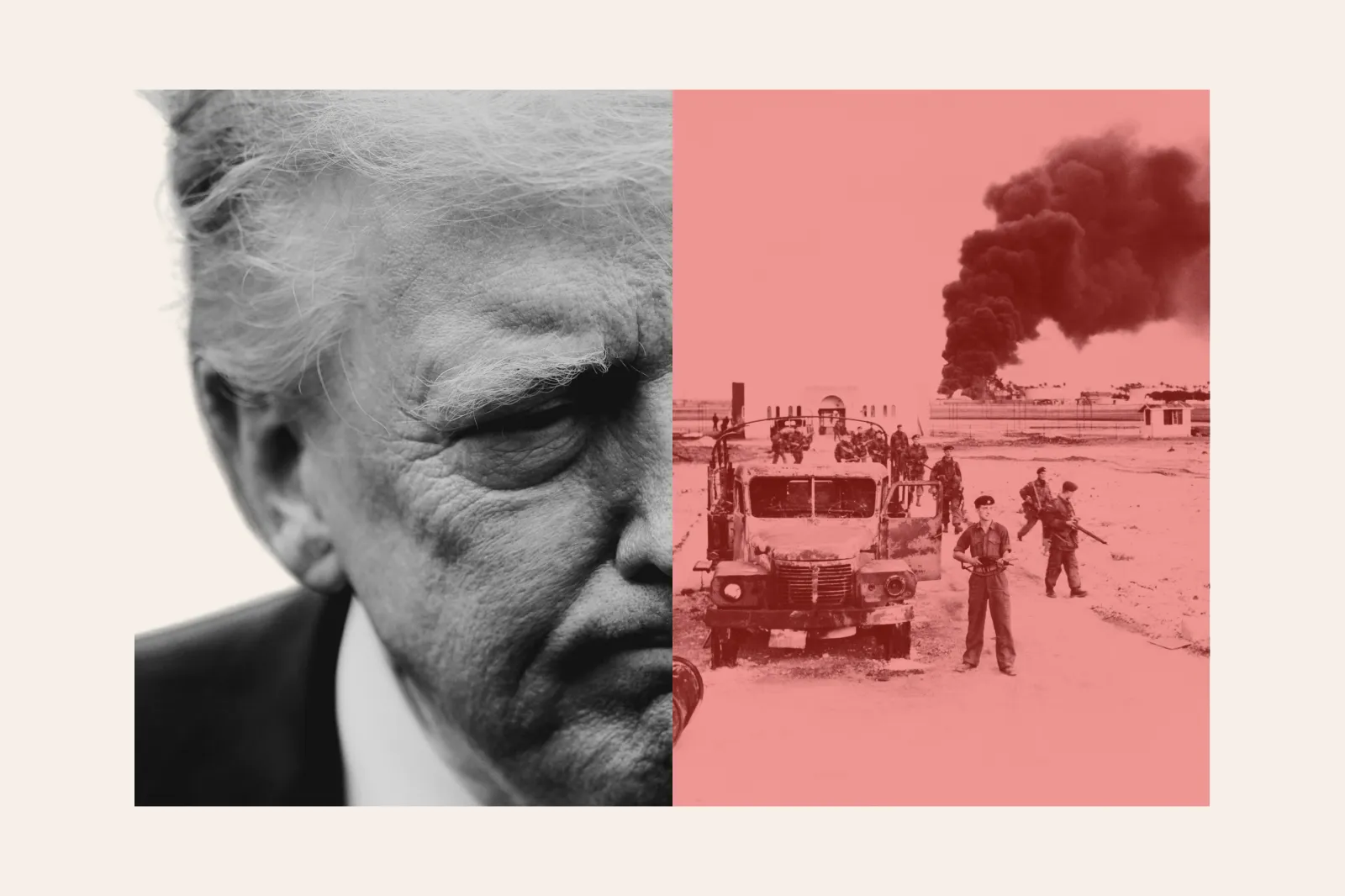
On November 6, 1956, British and French troops were scything through Port Said, the Egyptian city guarding the entrance to one of the world’s most-important waterways. A day earlier, their paratroopers had dropped in to seize the Suez Canal, with Israeli forces advancing across the Sinai Peninsula to help clear the way.
By midnight, the Anglo-French assault had stopped; not because their soldiers wilted, but because the governments commanding them had been forced to capitulate under pressure from Washington.
U.S. President Dwight Eisenhower had threatened to brutalize Britain’s battered economy, and rallied the United Nations to demand a ceasefire and withdrawal. America’s economic and political influence achieved in hours what Egyptian armed resistance could not, and brought the Western military campaign to a humiliating halt.
Read More on Analysis
Seventy years on, America is locked in its own conflict over another critical shipping route, the Strait of Hormuz. Washington is now on the receiving end of the uncomfortable lessons it once taught its European allies—except, this time, the economic and political damage is self-inflicted.
When Markets Beat Missiles
The Suez Canal is a sliver of water barely a fifth of a mile wide that runs through Egypt, connecting the Mediterranean and Red Seas and separating Africa from Asia. It is now, as it was then, the shortest maritime route between Europe and Asia, and, in 1956, more than half the oil required by Western Europe passed through it.
When Egyptian President Gamal Abdel Nasser nationalized the Anglo-French company operating it that July, Britain’s Prime Minister Anthony Eden and his French counterpart Guy Mollet decided they simply couldn’t stomach the possibility of losing stewardship over the canal and wider Middle East.
London and Paris hatched a dastardly plan with Israel. It was decided that Israeli forces would invade the Sinai Peninsula, providing the pretext for an Anglo-French "intervention" to separate the combatants and occupy the canal. If Nasser happened to be toppled in the process, then all the better.

...

...
The ground offensive began with an impressive display of firepower on November 5; British and French aircraft bombarded Egyptian defenses as paratroopers dropped in near Port Said. Amphibious forces began pushing south from the city the following day.
But the Egyptians saw it coming, and Nasser’s forces had deliberately scuttled ships in the canal, blocking the transit of desperately needed oil. This piled more weight on Britain’s creaking postwar finances, and Eden’s government desperately needed emergency assistance from the International Monetary Fund to stabilize its currency. Without American support, the pound faced a potentially disastrous collapse.
Washington had no intention of coming to the rescue. Eisenhower not only refused to help Britain while its troops occupied Egypt, but also threatened to tank its economy by selling America’s sterling holdings.
Facing economic ruin, Eden and Mollet capitulated, halted their offensive, and withdrew their troops over the following weeks. Eden resigned in January 1957, his premiership ruined, while Britain’s humiliation at Suez exposed how dependent it had become on American economic support and accelerated its decline toward middle-power status.
Seventy years later, America has military strength and financial resources Britain could only dream of. But Trump’s war against Iran has exposed a familiar vulnerability: even the world’s strongest armed forces cannot shield their government from the economic consequences of war.
Tehran’s government has survived months of U.S. and Israeli strikes, and its military retains the capacity to choke off Hormuz, through which roughly one-fifth of the world’s petroleum passed before the war. Eight months of disruption have driven up energy prices and compounded inflationary pressures from Trump’s tariff campaign, leaving American households to shoulder the costs.

...
On Tuesday, the American electorate delivered its verdict, handing Democrats both chambers of Congress. Six in 10 voters told The Associated Press that the decision to attack Iran was wrong, while the cost of living weighed even more heavily on their choices.
Britain’s economic vulnerability brought Eden’s military adventure to a humiliating end. Trump’s intervention in Iran endures, but his Republican Party has been made to pay the price.
Coalition of the Unwilling
Eisenhower’s financial pressure was only one part of the campaign that brought Britain, France and, later, Israel out of Egypt. The American president also used the United Nations, which Washington had helped establish just 11 years earlier, to marshal international opposition to the invasion and help engineer an orderly withdrawal.
When Britain and France vetoed Security Council resolutions demanding an end to their intervention, Washington helped transfer the dispute to an emergency session of the General Assembly, which overwhelmingly backed an immediate ceasefire and withdrawal.
Further negotiations produced the United Nations Emergency Force—the organization’s first armed peacekeeping mission. Its troops supervised the withdrawal of invading forces and subsequently patrolled the Egyptian-Israeli frontier, helping maintain a fragile peace. By March 1957, the last Israeli soldiers had withdrawn from Egypt, and the canal reopened the following month once the sunken ships were cleared.
Eisenhower understood how American economic strength, international institutions and diplomatic relationships could be used together to exert influence far beyond what military force alone could achieve.

...

...
Trump has spent much of his second presidency systematically undermining those assets. In January, he ordered America’s withdrawal from 66 international organizations and U.N. entities, arguing that they undermined U.S. sovereignty and wasted taxpayers’ money.
Trump has also driven a wedge between Washington and its trans-Atlantic allies. European NATO members are openly discussing how to prepare for a future without guaranteed American military support, while the European Union has been forced to negotiate a tariff deal to avert a full-blown trade war with Washington.
It wasn’t exactly a shock, then, when those same allies ignored Trump’s demands to send warships to reopen Hormuz earlier this year, despite having considerable economic interests of their own in restoring commercial shipping.
After years of threats and recriminations, European governments had little appetite for joining Washington's offensive launched against Iran with almost no consultation. Beyond allowing America’s air force to use its bases to launch strikes, Britain has offered no support. Instead, London and Paris have assembled a coalition of dozens of countries for a strictly defensive Hormuz mission, separate from Washington's campaign, that will begin only when conditions permit following a ceasefire.
The lesson America taught Britain at Suez has come full circle. Trump has launched a war whose economic consequences have helped turn voters against him, while alienating the very allies whose support might have helped secure its objectives.
View 0 Comments
Submit Correction
View Editorial & AI Guidelines