
10
Loading video...


By Shane Croucher and David Averre
0
Share
Newsweek is a Trust Project member
See more of our trusted coverage when you search.Prefer Newsweek on Googleto see more of our trusted coverage when you search.
In September, Iran did not load a single barrel of crude oil for export—not one—according to tanker trackers Kpler and Vortexa. This month, the rial, Iran’s currency, sank to a record low. The oil minister resigned. He should have hung around for a severance package.
None of this has arrived on President Donald Trump’s ever-shifting schedule. His timeline for victory has gone from a few weeks, to months, to after the midterms. On October 8 he pledged not to attack Iran before Americans vote on November 3.
Moreover, the Iranian regime has, under severe pressure, held together. Its ability to disrupt energy flows through the Strait of Hormuz was underappreciated. The overwhelming might of the U.S. and Israeli militaries was not enough to secure a rapid win.
Read More on Analysis

...
Neither is Tehran going quietly. A dozen tankers were attacked in and around Hormuz in a single week in the past month. Iran’s Houthi allies are taking the war to Riyadh. But read closely, this is the behavior of a power watching its leverage drain away, not one gaining it.
“In this game of chicken, time favors the Islamic Republic only if Washington lets it: the regime is betting that it can rebuild faster than the West can sustain its attention,” Khosro Isfahani, research director at the National Union for Democracy in Iran, told Newsweek. “The sooner Washington adopts a regime collapse strategy, the better.”
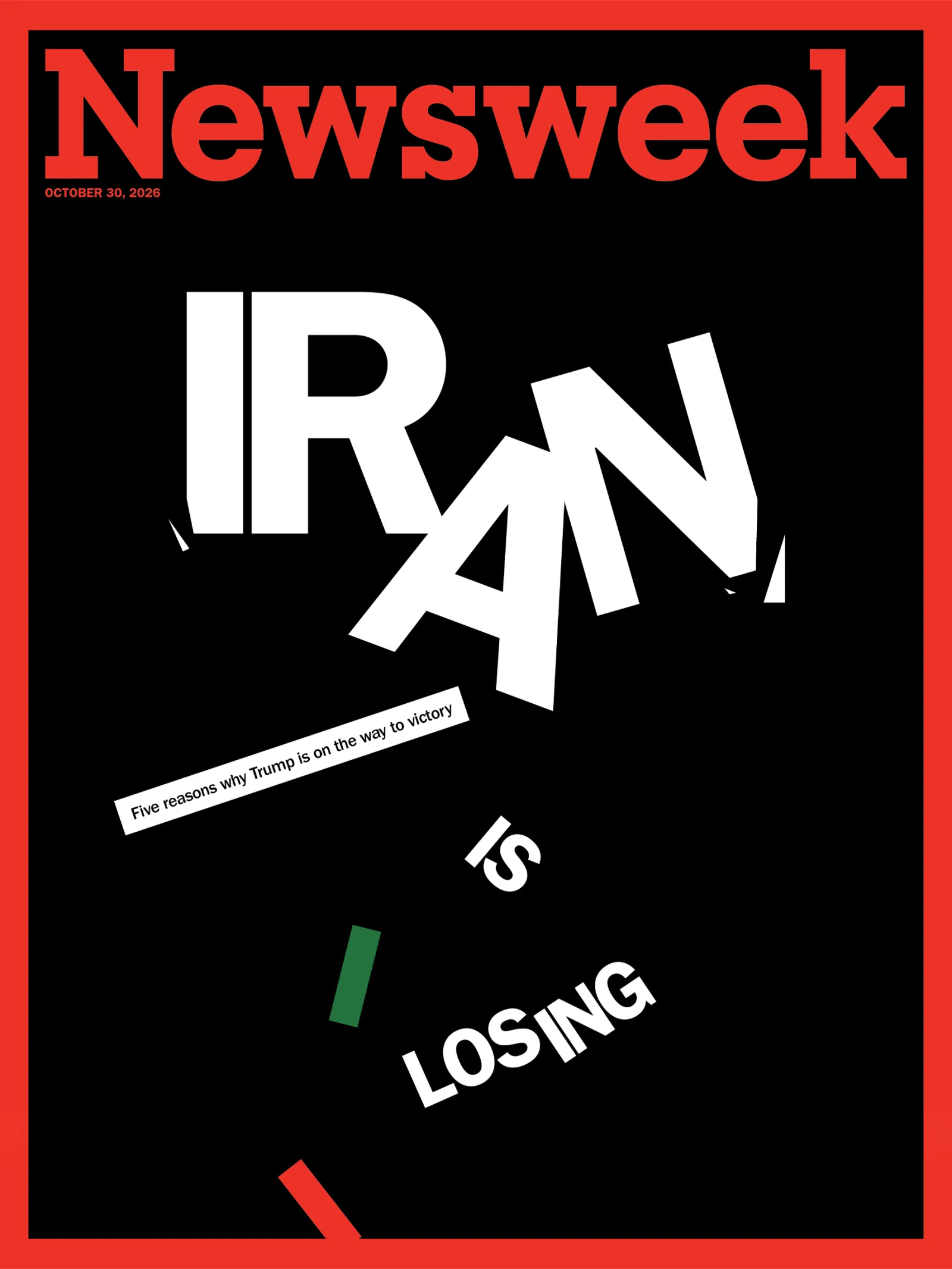
There are several signs that Trump is on the cusp of his long-promised victory, albeit months delayed. Here, Newsweek unpacks five of them.
1. The Main Tool of Iranian Leverage Is Weakening
Iran’s chokehold on the Strait of Hormuz, its strongest card since the fighting started, loosened through September. Tehran is now fighting to win it back.
By September 30, Gulf crude exports were running at 18.3 million barrels a day on a seven-day average, according to Kpler, above the 18 million average in the year before the war. That count includes Red Sea and other routes.
Secretary of State Marco Rubio declared that Iran had “lost complete control” of the strait.
Related Story
The Data Center Election
Then came the backlash. Attacks on tankers hit their highest weekly tally of the war in the week to October 5, and just seven commodity vessels crossed the strait on October 6, the fewest since July 23.
Crude through the strait fell 27 percent in a week, to 74 percent of its prewar level, Kpler said. Six ships were struck on October 11 alone, and empty supertankers have begun turning away from Fujairah, United Arab Emirates, where they wait to collect crude shuttled out through the strait.
Yet the region’s oil kept moving. Exports from Red Sea and Gulf of Oman terminals, which bypass the strait, rose to 6.7 million barrels a day, more than double prewar levels, keeping total Middle East crude exports at roughly prewar levels, Kpler’s analysts found. However, a subsequent wave of attacks has put that recovery under renewed pressure.

...
“Iran is not losing Hormuz as a bargaining chip, but it is losing its ability to dictate the economic terms of the confrontation,” Andreas Krieg, a senior lecturer at King’s College London’s School of Security Studies, told Newsweek.
Burcu Ozcelik, senior research fellow for Middle East security at the Royal United Services Institute think tank, told Newsweek that “contingency planning to build away from the Strait of Hormuz is shifting into infrastructure implementation mode, and this also spells trouble for Tehran.”
Tehran’s own diplomacy shows what hurts most. Among its conditions for reopening Hormuz are an end to the U.S. naval blockade, the lifting of sanctions on its oil sector and the unfreezing of its assets abroad.
Washington’s reply was “insufficient,” Iran’s security chief, Mohsen Rezaei, said on October 11, though he acknowledged it accepted some of Tehran’s conditions.
In September, President Masoud Pezeshkian even offered to dilute Iran’s enriched uranium, dismissing the concession with the words: “It’s not a big deal.”
Those are not the demands of a country bargaining from strength. A country confident in its leverage doesn’t rush to trade it.

...
2. Iran Is Approaching a Full Economic Crisis
A dollar fetched about 2.72 million rials on October 4, up from about 2.2 million at the start of September. A central bank plan to pump up to $2 billion in cash into the market failed to halt the slide.
With the rial depreciating, prices for everything from food to medicine are climbing by the week. Iranians have described being unable to cover rent or afford medicine, as private-sector jobs vanish.
The International Monetary Fund now expects Iran’s economy to shrink 7.6 percent this year, worse than the 5.4 percent contraction it forecast in July. Iran’s own statistics agency reported output down 10 percent year on year in the spring, the steepest quarterly fall in 15 years.
Oil sales typically make up roughly a third of Iran’s state budget and are a key source of funding for its Islamic Revolutionary Guard Corps. The U.S. naval blockade has now cut that lifeline heavily. Treasury Secretary Scott Bessent claimed that in early October Iran would have no oil on the water “for the first time in history.”
Chinese buyers have been living off Iranian crude stockpiled offshore before the blockade, but no more than about 10 million barrels remain in floating storage off Malaysia, according to the advocacy group United Against Nuclear Iran, down from nearly 40 million in late August.
“Economic pressure is clearly working, but that does not mean it will produce the political outcome Washington wants,” Krieg said.
Isfahani said pressure alone will produce “tactical concessions, a reopened strait or a resumed round of talks, but never strategic ones.”
The longer it lasts, the greater it tests a regime that, in January, killed thousands of protesters angered by economic distress. Does it want to risk a sequel, in a society brought to its knees by war?

...
3. The IRGC Letter Shows Desperation, Not Strength
The IRGC’s open letter to Americans published September 29, claiming victory over the U.S. while appealing directly to midterm voters to turn against Trump, is less the victory lap it appears than a plea for help.
Released exactly five weeks before the midterms, it urges Americans to take back control from their politicians, arguing: “Now is the time, as the American political system is at its weakest.”
But a military that believed its own claims of victory would not need to go over Trump’s head to his voters. The letter’s real target is a new Congress that might tie the president’s hands, Tehran’s best realistic hope of better terms.
Pezeshkian sent the same signal from the other direction, saying he wants Washington back to the June ceasefire framework before then: “We don’t want it to get to the midterm elections.”
Not everyone reads this as weakness. Isfahani sees calculation, not panic: “These are not acts of desperation; they are sophisticated evil.”
Peiman Salehi, a Tehran-based political analyst, told Newsweek: “Addressing American voters is an attempt to influence Washington’s calculations; it does not demonstrate that Iran’s survival depends on the election.”
Either way, it is a bet on the calendar, and a poor one. Trump says the vote will have “no impact” on his Iran policy, and on October 13 he said he would make a decision on Iran “very soon.” At a rally in Alaska that evening, he told supporters: “Oh, wait till you see what we do to Iran. We’re going to do a number.”
“Tehran is overestimating how much the U.S. midterms are likely to impact President Trump’s decision over a return to military conflict with Iran,” Ozcelik said.
Officials in Tehran reportedly fear that Trump will escalate once the votes are counted. If Republicans outperform expectations, the president will feel vindicated. And if Democrats triumph, he may conclude he has nothing left to lose.
Iran is watching the calendar and doesn’t like what it sees.
...
4. Iran Faces a Growing Replenishment Problem
Iran’s missile program has survived the war, but rebuilding it is another matter.
U.S. assessments in April found that more than 80 percent of the plants making its missiles and solid-fuel rocket motors had been damaged. Western officials told Bloomberg that Iran retains enough missile and drone production capacity to replenish its arsenal, while one official said Russia was also supplying missiles.
Yet a report by former CIA analyst Jim Lamson concludes the air campaign most likely severely degraded much of Iran’s prewar missile manufacturing capacity over the long term. Quantity is not the only problem.
“Precision weapons depend on complex electronics, specialized components, experienced engineers and supply chains that sanctions are increasingly disrupting,” Krieg said. “Iranian claims that weapons production has increased dramatically should therefore be treated cautiously.”
Related Story
Putin’s Kitchen Sink Strategy in Ukraine
Ozcelik expects procurement of key components to remain “a lingering complication for Tehran and one that it will try, but struggle, to overcome in the short to middle term.”
People are harder to replace than parts. U.S. and Israeli strikes have killed the supreme leader, the IRGC’s commander, its navy chief and its intelligence chief.
The replacements named in August are mostly old hands: Rezaei, the security chief, led the IRGC through most of the Iran-Iraq War.
Some analysts see a regime running short of trusted successors rather than grooming new ones. Isfahani disagrees, saying the “IRGC has a deep bench and institutionalized succession, so killing commanders degrades the organization without breaking it.”
Degradation is the point, though. Under blockade, and as future strikes perhaps claim more leaders, every loss is harder to make good.

...
5. Iran Is Failing to Push Out the US Navy
Related to the first sign, but still distinct, is that Iran plainly cannot break the U.S. naval blockade by force.
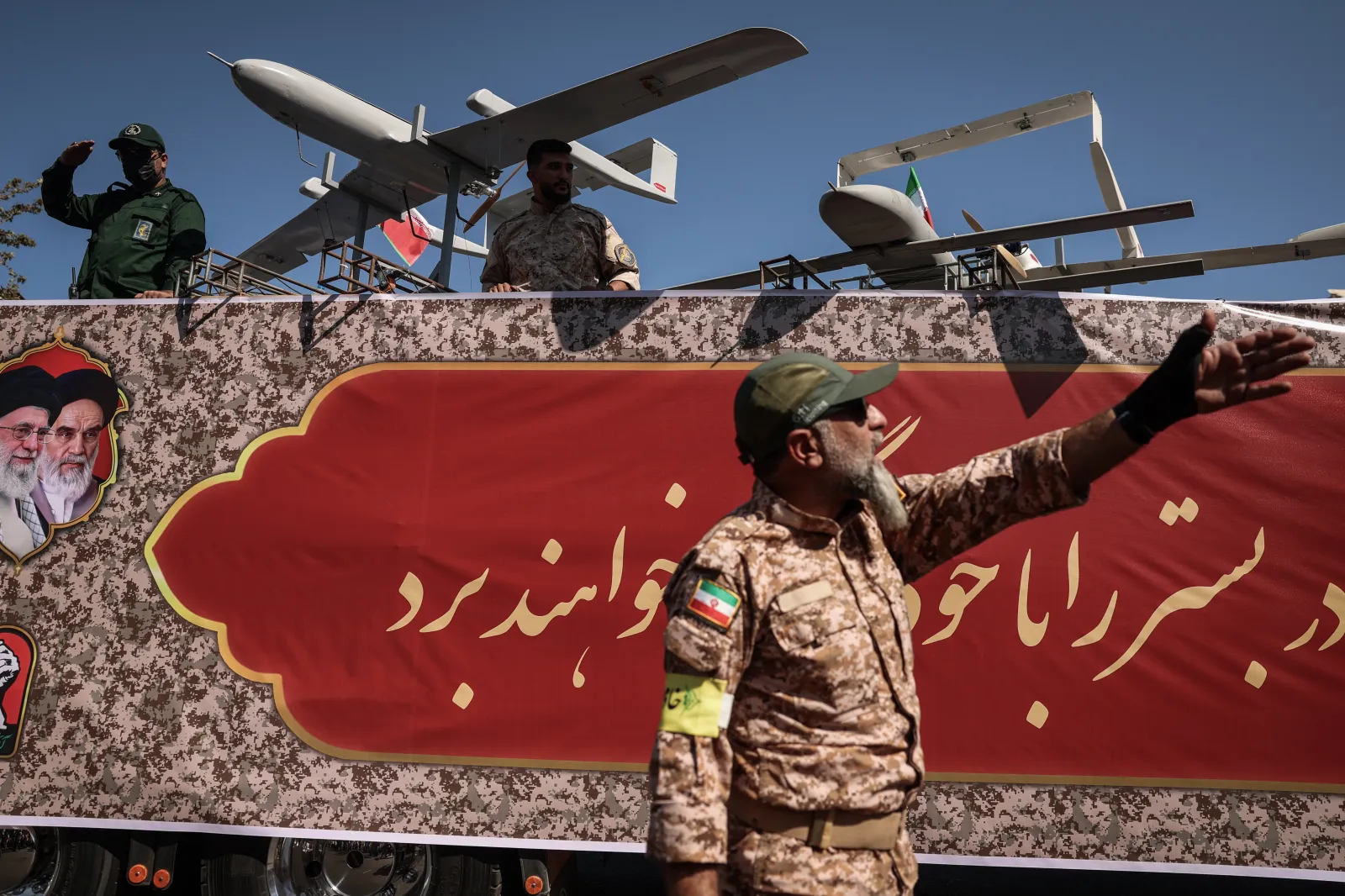
On September 5, the IRGC fired ballistic missiles at an American aircraft carrier and a destroyer enforcing it. Neither was hit, U.S. Central Command said.
Since the blockade resumed on July 14, U.S. forces have turned back 135 ships and disabled four, most recently on October 10, CENTCOM said. They have also destroyed 10 tankers linked to the IRGC. On October 6, they sank an Iranian-affiliated dhow in the Gulf of Oman that CENTCOM said was conducting surveillance and targeting U.S. Navy ships. The crew was removed beforehand.
When the IRGC’s navy commander threatened on October 13 to sink American warships that approach the strait, CENTCOM retorted that he “has no navy.”
Iran can still draw blood, certainly. Eight Marines were reportedly injured in an Iranian anti-ship missile attack on September 14. But each Iranian attempt to raise the blockade’s cost, from attacks on shipping to strikes on Gulf infrastructure, “exposes the regime further and deepens the coalition against it,” Isfahani said.
Tehran is in check. The regime can make Hormuz dangerous for everyone else, as October has shown, but it cannot make the strait work for itself.
...
The Case Against
This reading of the signs could still prove premature, much like Trump’s earlier timelines. Economic pain may not topple a regime prepared to kill its own people, and Tehran proved once again in January that it is. Many Iranians are too focused on surviving to protest. “What looks like an inevitable ‘breaking point’ has proven elusive for a long time,” Ozcelik said.
Nor is Iran’s arsenal spent. Unverified reports of a 30-missile IRGC drill this month “challenge the exhausted-arsenal narrative, although exercises alone cannot establish production rates,” political analyst Salehi said.
Each salvo also drains scarce American interceptors. U.S. forces fired 60 to 70 Patriots and more than a dozen THAADs to fend off roughly 20 missiles aimed at bases in Jordan in September.
Moreover, Iran’s leverage may be migrating rather than vanishing. The Houthis, who seized much of Yemen’s Red Sea coast in September, reportedly with IRGC help, have since lost ground near the Bab al-Mandeb Strait but turned their fire on Saudi Arabia itself. Attacks on Riyadh’s main airport over the weekend of October 10 killed 14 people, including an American. France has started putting into effect a deal to help protect Saudi oil infrastructure, dispatching troops and defense systems to Yanbu, the Red Sea export terminal that allows crude to bypass Hormuz altogether.
Tehran is widening its target list, too. Iran’s security chief Rezaei has threatened Gulf data centers, undersea cables and AI facilities if war resumes, and the country has reportedly warned it could send forces into neighboring countries.
“While Iran has suffered losses, it can still strike sensitive military targets and infrastructure across the Gulf, including possibly data centers, energy infrastructure and desalination plants,” Ozcelik said.
Related Story

Beijing Looms Large Over American AI Politics
The Strait of Hormuz itself remains far from normal. U.S. naval data recorded approximately 29 U.S.-facilitated transits per day in the three days to October 11, while independent tracking counted substantially fewer confirmed crossings. Before the war, roughly 138 vessels of all types typically crossed the strait each day.
“The premise confuses passage with security,” Salehi said. “Tankers getting through does not mean normality has returned: captains are reportedly commanding $100,000 a month, while freight and insurance remain expensive.”
Brent crude settled near $108 on October 19, and Goldman Sachs estimated in September that geopolitical risk is adding over $20 a barrel. Nor is the pain one-sided: the same IMF forecast has Kuwait, Iraq, Qatar and Bahrain shrinking faster than Iran this year.
Tehran is also betting on American impatience. In a Pew Research Center survey released October 8, 65 percent of Americans disapproved of Trump’s handling of the war, up from 61 percent in March, and nearly half expected it to last more than another year.
In September, the International Crisis Group’s Hamidreza Azizi expected Iran to stay “calibrated, but increasingly aggressive” to prove its leverage wasn’t fading. October bore that out.
Krieg of King’s College warned of where it leads. “Its leverage is becoming less effective at lower levels of violence, potentially making the next escalation considerably more dangerous,” he said.

...
None of this guarantees a clean ending for Trump or Iran. The regime will call any deal a win, and its survival is how Tehran defines victory. But the direction of travel is hard to ignore. Iran’s crude exports have stalled, its economy is shrinking fast and its escalation is an effort to claw back leverage it has already largely lost. What survives beneath the noise from either side is diplomacy. Pezeshkian now calls talks “futile,” yet Tehran said it is finalizing its response to Washington’s latest comments, and Vice President JD Vance has called for a “meaningful” reduction in Iran’s enrichment capacity, which some experts read as a softening of the demand for zero.
“Diplomacy is considerably more advanced than the public rhetoric suggests, but Iranian negotiators have repeatedly reopened provisions that Washington considers settled,” Krieg said.
We’ll see soon enough whether Tehran puts its nuclear program on the table before the blockade lifts, and whether commercial shipping continues to move despite Iran’s efforts to disrupt it.
Signs pointing in the other direction might be a successful strike on a U.S. warship; Iran using Trump’s pre-election pause to rebuild faster than its economy drains; or a Houthi squeeze on Saudi Arabia’s Red Sea bypass that gifts Tehran another chokehold.
“The question is whether Washington has the political will to claim victory,” Isfahani said.
Wars like this rarely end with a signing ceremony on a battleship. They end when one side runs out of cards to play. Iran is down to its most valuable remaining one: its nuclear program. Tehran has already begun putting it on the table. That is what a player does when the rest of the hand is gone.
Newsweek
View 0 Comments
Submit Correction
View Editorial & AI Guidelines