
...

By Hannah Millington
Health Reporter
0
Share
Newsweek is a Trust Project member
See more of our trusted coverage when you search.Prefer Newsweek on Googleto see more of our trusted coverage when you search.
Opium use may have been widespread in ancient Egyptian culture—including potentially among notable kings.
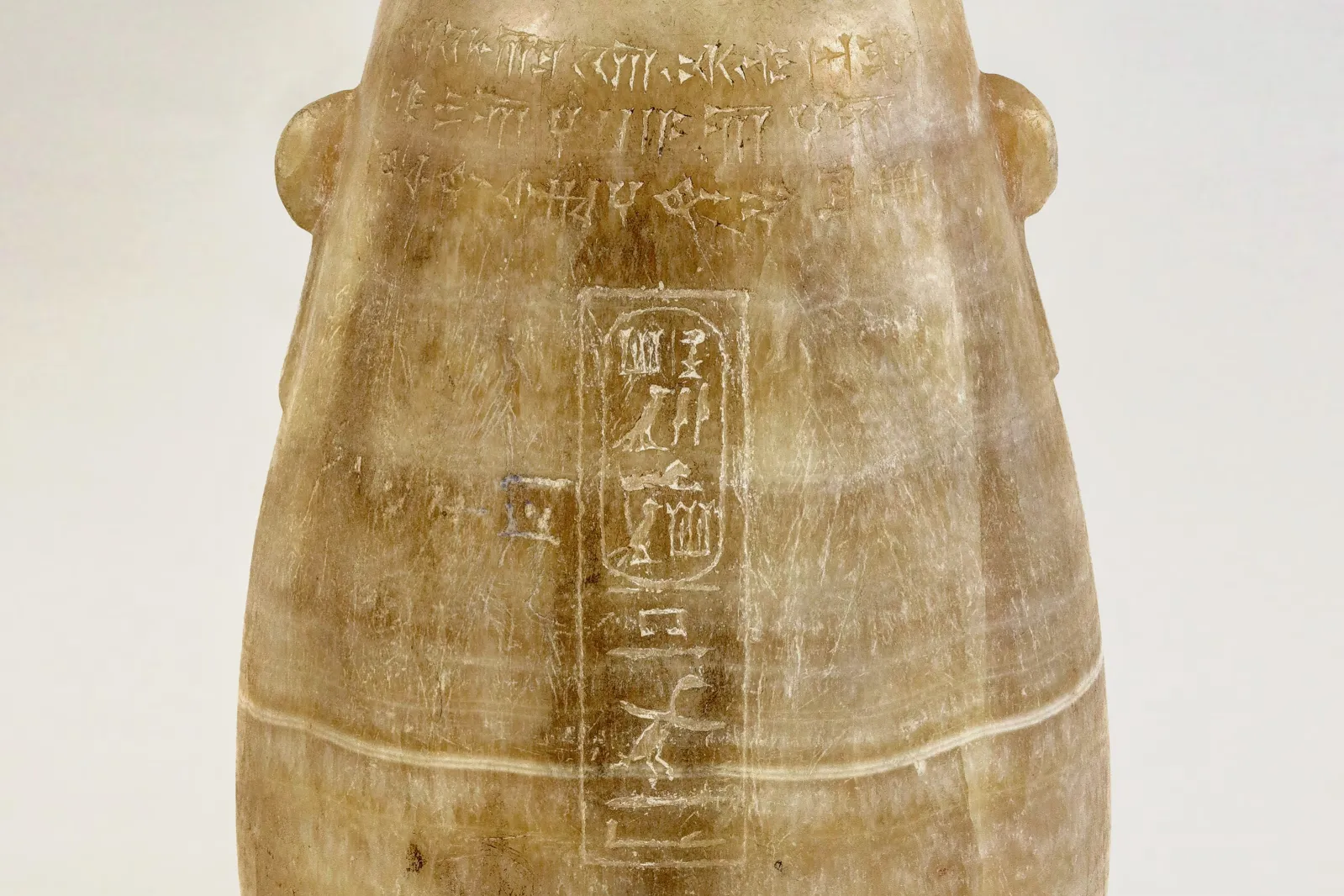
Yale researchers found chemical traces of opiates in an ancient alabaster vase at the Peabody Museum, providing the “clearest evidence to date of broad opium use in ancient Egyptian society.”
This suggests similar alabaster vessels from the time period—often made from soft calcite stone and used for perfumes and ointments—could also contain traces of opiates, according to study author and research scientist at the museum Andrew J. Koh.
Read More on Science
“Our findings combined with prior research indicate that opium use was more than accidental or sporadic in ancient Egyptian cultures and surrounding lands and was, to some degree, a fixture of daily life,” said Koh in a statement. “We think it’s possible, if not probable, that alabaster jars found in King Tut’s [Pharaoh Tutankhamun’s] tomb contained opium as part of an ancient tradition of opiate use that we are only now beginning to understand.”
...
The earliest origins of rare intact—and inscribed—Egyptian alabaster vessels like the one examined are generally unknown but span the reigns of Achaemenid emperors Darius, Xerxes, and Artaxerxes, a period covering 550 to 425 BCE, according to the researchers.
The vase in question with traces of opiates has been part of the museum’s Babylonian Collection since shortly after the assemblage of about 40,000 ancient artifacts was established at the university in 1911.
The research team’s analysis of dark-brown aromatic residues in the vase revealed definitive evidence for noscapine, hydrocotarnine, morphine, thebaine, and papaverine—“well-known diagnostic biomarkers for opium.”
They say the results draw a similarity to the discovery of opiate residues in a group of Egyptian alabaster vessels and Cypriot base-ring juglets found in an ordinary tomb, likely of a merchant family, in Sedment, Egypt, located south of Cairo. This dates back to the New Kingdom, the Egyptian empire that stretched from the 16th to the 11th century BCE.
Both findings stretching over a millennium across socio-economic groups raise the distinct possibility that opium is present among the large quantity of alabaster vessels found in Tutankhamun’s tomb in the Valley of the Kings, Koh said.
He added there are clear signals of opium use that go beyond medicinal usage and into the spiritual realm throughout antiquity, stretching from ancient Mesopotamia to Egypt and through the Aegean.
...
After the discovery of Tutankhamun’s tomb in November 1922 along with many artifacts including alabaster vessels, chemist Alfred Lucas examined many of them in 1933. While he wasn’t able to identify the organic materials at the time, he determined most were not unguents or perfumes.
“We now have found opiate chemical signatures that Egyptian alabaster vessels attached to elite societies in Mesopotamia and embedded in more ordinary cultural circumstances within ancient Egypt,” said Koh. “It’s possible these vessels were easily recognizable cultural markers for opium use in ancient times, just as hookahs today are attached to shisha tobacco consumption.
“Analyzing the contents of the jars from King Tut’s tomb would further clarify the role of opium in these ancient societies.”
The researchers emphasized that we now “stand at the threshold of completely reimagining” the nature of ancient pharmacology and medical practices through “fresh, transdisciplinary approaches that also hold promise for better understanding our own world today.”
Do you have a tip on a science story that Newsweek should be covering? Do you have a question about the discovery? Let us know via science@newsweek.com.
Reference
Koh, A. J., Lassen, A. W., & Crandall, A. M. (2025). The Pharmacopeia of Ancient Egyptian Alabaster Vessels: A Transdisciplinary Approach with Legacy Artifacts. Journal of Eastern Mediterranean Archaeology and Heritage Studies, 13(3), 317–333. https://doi.org/10.5325/jeasmedarcherstu.13.3.0317
View 0 Comments
Submit Correction
View Editorial & AI Guidelines