
10
Loading video...

By Andrew Stanton
Reporter
0
Share
Newsweek is a Trust Project member
See more of our trusted coverage when you search.Prefer Newsweek on Googleto see more of our trusted coverage when you search.
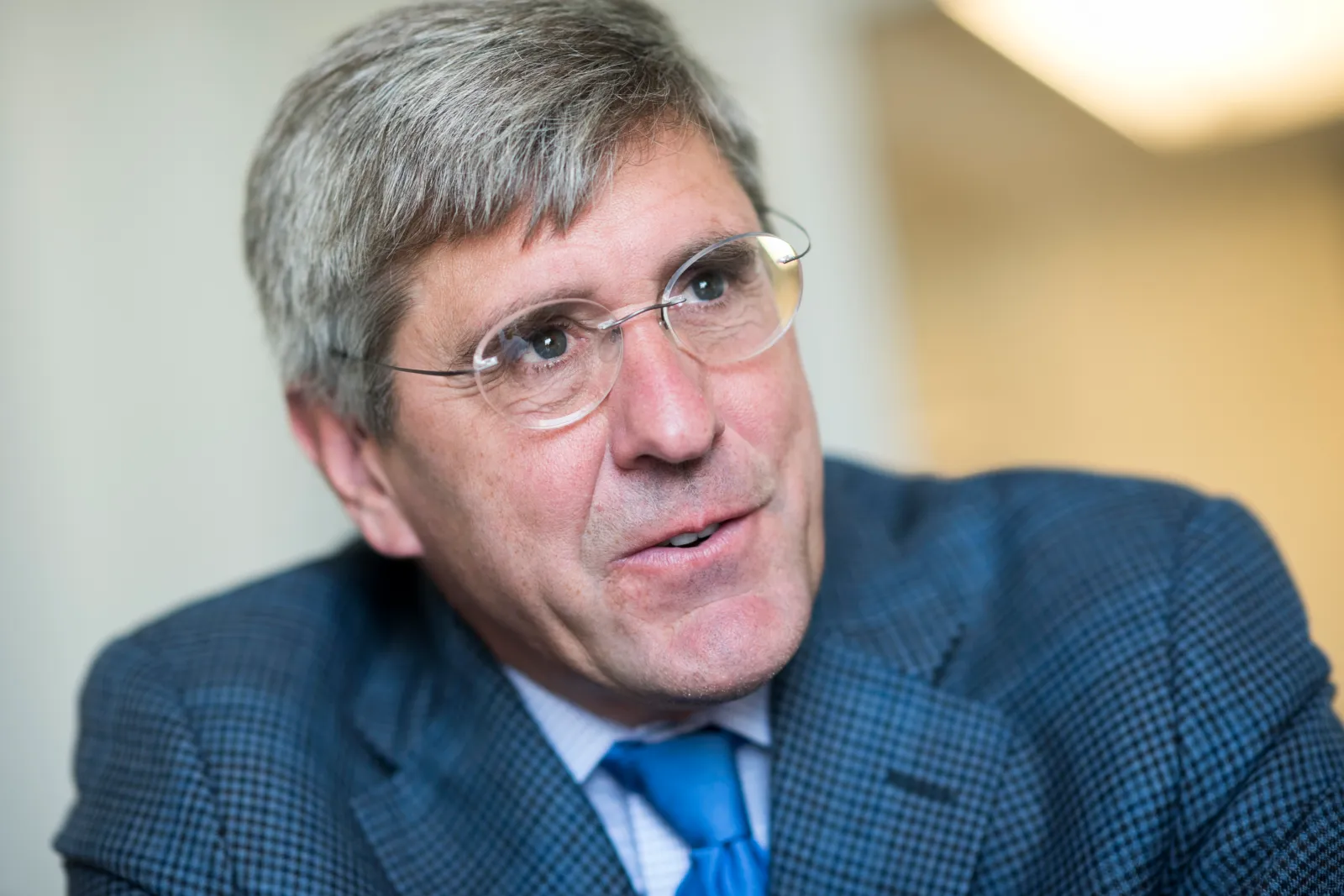
The Trump administration faces a “big question” about how to reimburse Americans after the U.S. Supreme Court struck down its tariff policy as illegal last month, Stephen Moore, who served as an economic adviser to President Donald Trump during his first term, told Newsweek.
He said solving the issue of tariff refunds will be “messy” and that it's not clear exactly how it will be sorted out. Although some have floated checks up to $2,000 for Americans, Moore didn't say exactly what the number should be but said he is “almost certain” consumers will be compensated.
Trump previously said the U.S. was bringing in “trillions of dollars” and that a “dividend of at least $2,000 a person (not including high income people!) will be paid to everyone.”
Read More on Politics
Why It Matters
A court majority struck down Trump’s sweeping tariff policy last month, limiting his ability to impose tariffs without congressional authority. The president sought to impose large tariffs on dozens of countries upon his return to office, but that policy sparked legal questions about whether he had the authority to impose them under the International Emergency Economic Powers Act (IEEPA), a 1977 law that grants commanders-in-chief special powers in emergencies.
The administration now faces the question of what it must do with the revenue it collected from the tariffs. In his dissent, Supreme Court Justice Brett Kavanaugh wrote the decision “says nothing today about whether, and if so how, the Government should go about returning the billions of dollars that it has collected from importers,” a process he said would likely be a “mess.”
What To Know
Moore, a conservative economist who founded the Committee to Unleash Prosperity, said on Monday sorting out the tariff refunds will be a “very complicated issue.” The checks must go out to the companies that paid the tariffs, he added.
“Those are thousands and thousands of businesses that wrote well over $150 billion of checks to the government, which have now been declared illegal collection. So those will have to be rebated,” Moore said.
Many studies suggest the average family paid somewhere around $2,000 in tariffs, he said.
“That's a big question for dealing with this issue. So I'm not clear how this is all going to be sorted out, but I'm almost certain that consumers are going to have to be reimbursed something because you can't have all the voters out there feeling like all the money went to big corporations and not to them when they paid some of the tax,” Moore explained.
It is “required by law” that companies who paid the tariff receive reimbursement. Even though many passed along those costs to consumers, they were the ones who wrote the check. Moore said the administration could pass a policy that requires businesses to reimburse consumers who paid some of the tax, even though they did not pay it directly.
“I think American families are going to demand that kind of compensation,” he said.
...
Moore Says Economic Perception Remains ‘Mystery’
The economy remains a major issue for the Trump administration, particularly as the midterms approach. Democrats are hoping to use the issue of affordability to win seats in the House of Representatives and Senate. Polls show Trump’s approval rating slipping and Democrats’ carving out a lead in the race for Congressional control.
Many metrics paint a picture of an improving economy—declining housing prices, lowering inflation and a stock market performing well. But poll-after-poll still shows consumer sentiment and approval of how Trump is handling the economy remains low.
Moore said that is “the real mystery.”
High inflation during the Biden administration is a factor in why consumers are not more optimistic about the state of the economy, he said.
“I think this is the lingering effects from the high prices that people are still paying as a result of that runaway spending that led to the inflation,” Moore said. “People expected prices to fall. I think that was an unrealistic expectation. We don't really want falling prices. Deflation can be even worse for an economy than inflation because businesses just get crushed by that.”
He explained he believes voters will become more positive about the economy over the coming months. He added Trump can “stave off losses” by talking about policies including less regulation and lower taxes.
“People are already starting to feel the impact of the big beautiful tax bill. Less money is being withheld from their paychecks which started in January and in some cases that could be you know as much as $1,500 less taxes paid this year which is a significant stimulus to their personal income but also to U.S. economy,” he said.
What People Are Saying
Supreme Court Justice Brett Kavanaugh wrote in his dissenting opinion: “In the meantime, however, the interim effects of the Court’s decision could be substantial. The United States may be required to refund billions of dollars to importers who paid the IEEPA tariffs, even though some importers may have already passed on costs to consumers or others.”
President Donald Trump criticized the ruling last week: “The supreme court (will be using lower case letters for a while based on a complete lack of respect!) of the United States accidentally and unwittingly gave me, as President of the United States, far more powers and strength than I had prior to their ridiculous, dumb, and very internationally divisive ruling.”
William Reinsch, a senior economist with the Center for Strategic and International Studies (CSIS), told Newsweek previously: “Nobody will get any money back any time soon, but eventually importers who seek refunds should get them, but the burden will be on the importer to take the initiative."
What Happens Next
A federal appeals court on Monday sent the case V.O.S. Selections v. Trump back to the U.S. Court of International Trade. The legal battle over tariff refunds continues.
In a polarized era, the center is dismissed as bland. At Newsweek, ours is different: The Courageous Center—it's not "both sides," it's sharp, challenging and alive with ideas. We follow facts, not factions. If that sounds like the kind of journalism you want to see thrive, we need you.
When you become a Newsweek Member, you support a mission to keep the center strong and vibrant. Members enjoy: Ad-free browsing, exclusive content and editor conversations. Help keep the center courageous. Join today.


View 0 Comments
Submit Correction
View Editorial & AI Guidelines