...

By Giulia Carbonaro
Senior Reporter
0
Share
Newsweek is a Trust Project member
See more of our trusted coverage when you search.Prefer Newsweek on Googleto see more of our trusted coverage when you search.
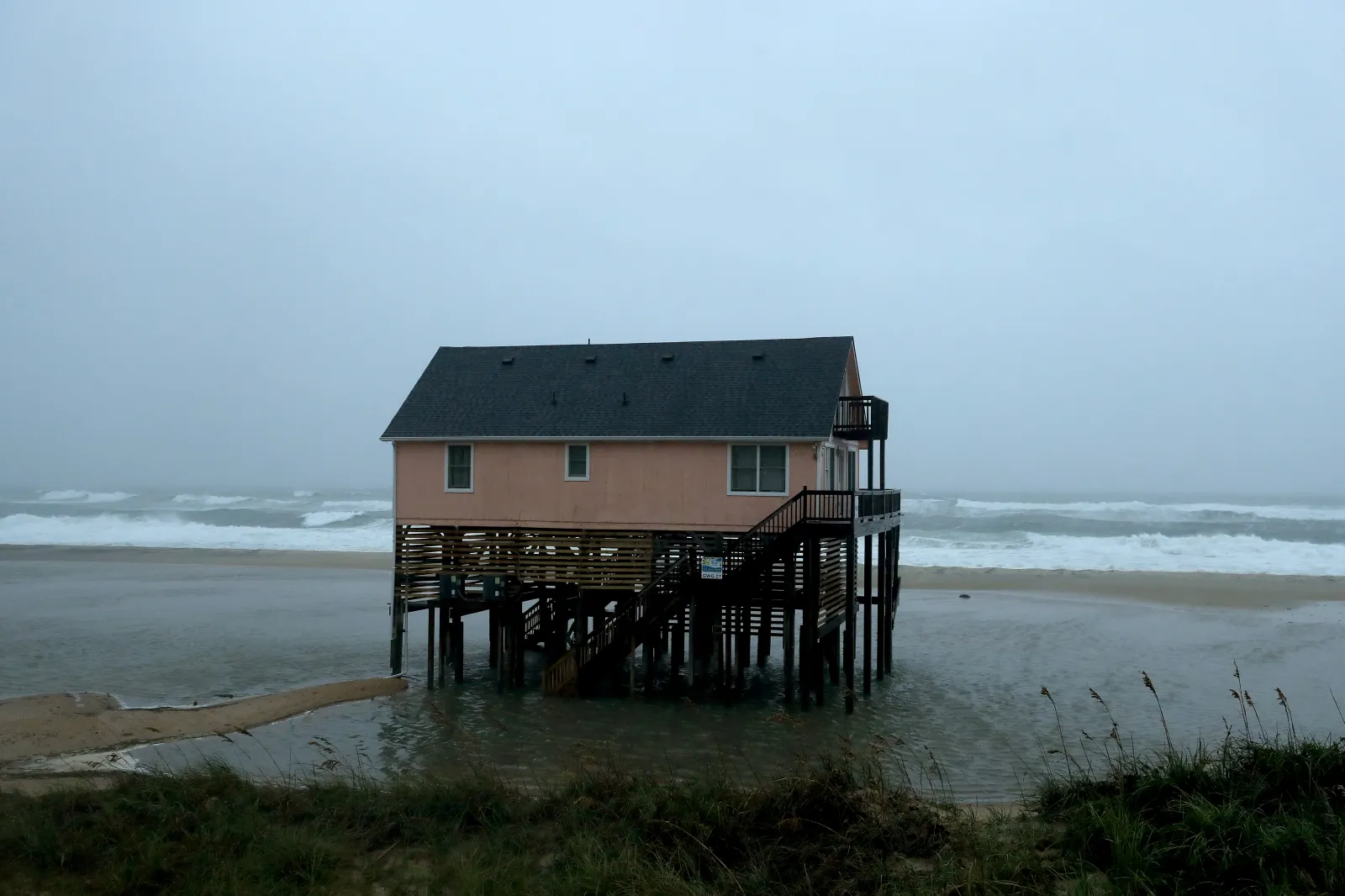
Five more homes collapsed into the sea along North Carolina’s Outer Banks on Tuesday, according to the National Park Service (NPS), after Hurricanes Imelda and Humberto pummeled the area in late September.
That brings the total number of oceanfront homes that have been plunged into the waves below to 15 over the last few weeks, rangers said.
Why Are These Homes Collapsing?
All but one of the 15 homes that have collapsed as waves battered the state’s east coast over the past few weeks were in the Buxton neighborhood.
Read More on News
...
This North Carolina coastal village, known for its beautiful beaches and the tallest brick lighthouse in North America—the Cape Hatteras Lighthouse—is now being threatened by extreme weather. In the Mid-Atlantic and Gulf Coast regions, climate change is fueling more severe and more frequent storms and other natural disasters which, combined with cliff erosion and rising sea levels, are undermining the stability of oceanfront homes like those in Buxton.
A similar phenomenon has been taking place in California. Earlier this month, parts of several properties’ backyards in the wealthy enclave of Rancho Palo Verdes, 25 miles south of Los Angeles, crumbled into the ocean due to a landslide. Authorities said it was unrelated to a phenomenon called the Portuguese Bend Landslide Complex, which causes the land to continually shift and has threatened coastal properties in the area for years.
The Cape Hatteras National Seashore branch of NPS warned visitors to the area on Monday of “expected hazardous weather conditions and continued presence of threatened oceanfront structures” in Rodanthe and Buxton. The dangerous weather, the agency said, will continue through Wednesday, October 29.
What Do We Know About the Incidents?
The first home that collapsed on Tuesday was in Buxton, in the Outer Banks. The three-story home at 46002 Ocean Drive, built in 1992, fell into the sea at 10:45 a.m. local time, according to rangers, about two hours before high tide.
Shortly after, three other homes came down. The second was another property built in 1992, a home at 46223 Tower Circle Road. This collapsed into the sea at approximately 11 a.m. local time, one hour before high tide.
A second home on Ocean Drive, at 46003, fell into the waves at 12:45 p.m. local time, 45 minutes before the noon high tide. The property, according to Island Free Press, was built in 2022—30 years later than the first two. A property at 46016 Cottage Avenue followed at 1 p.m. local time, while another one at 46213 Tower Circle Road came down at 4:30 p.m. local time.
The local newspaper reported that all homes were unoccupied at the time of collapse. The beach in Rodanthe and Buxton have been closed because of dozens of threatened oceanfront structures that may break apart or collapse, according to authorities, and the danger posed by damaged structures and debris to visitors.

...
Are More Homes Likely To Collapse?
The incidents were the latest to occur in the area since mid-September, when North Carolina’s east coast started being smacked by strong winds and surf waves. Since 2020, according to NPS, 27 privately owned, elevated beach-style homes have collapsed on North Carolina’s Seashore beaches.
Hundreds more homes are at risk, having been compromised by strong tides, coastal erosion, and intensifying storm surges. The National Weather Service has forecast strong northeasterly wind gusts, large waves, and ocean overwash in the Seashore area through Wednesday.
The Newport/Morehead City branch of the agency wrote on Wednesday that elevated surf remains in place, continuing to bring “dangerous marine conditions” to North Carolina’s coastal waters.
What Are Authorities Doing About It?
While the NPS has gotten on top of alerting visitors and homeowners of the risk to the properties, local authorities are also looking at other solutions to the growing threat—including beach renourishment, dune stabilization, and building fences.
But the escalation of climate change stands to undermine these efforts, Bobby Outten, Dare County’s manager and attorney, told Inside Climate News. In Buxton, he said, “the erosion rate there has increased, or is faster than what we had anticipated. I do know that our [beach nourishment] project hasn’t lasted as long as we anticipated, hence having to do the project again next year.”
As climate change continues fueling devastating storms, North Carolina’s authorities have “to figure out how to solve these problems in a way that’s economical and efficient, to preserve our infrastructure, to preserve our economy and to protect the public,” Outten said, “and so that’s what our role in this is.”
Newsweek contacted Outten and NPS by email on Wednesday for comment.
View 0 Comments
Submit Correction
View Editorial & AI Guidelines