...

By Daniella Gray
Reporter
0
Share
Newsweek is a Trust Project member
See more of our trusted coverage when you search.Prefer Newsweek on Googleto see more of our trusted coverage when you search.
Despite the well-known benefits for children’s physical and emotional health, one in 10 parents of toddlers and preschoolers say that their child plays outside just once a week—or less.
This is the finding of a nationally-representative poll of 710 parents of children aged 1–5, conducted in August by researchers from the University of Michigan Health C.S. Mott Children’s Hospital.
The team's analysis revealed that outdoor and imaginative play remain common—but screen-based activities are quickly catching up as a daily fixture of children’s lives.
Read More on Family & Parenting
Nearly one-third of parents surveyed reported that their child regularly engages in “media play”—such as video games—while three in five said their child watches TV or videos every day.
“Play is the key to how young children learn and develop,” said Sarah Clark, M.P.H., co-director of the Mott Poll. “Our report suggests that many families could support healthier development by encouraging a wider variety of play experiences.”
...
Clark told Newsweek that small pockets of time—even just 15 minutes—can make a difference.
“Parents of young children can try... spending 15 minutes at the park before grocery shopping or running an errand,” she said. “Another option is for parents to park a block away from their destination and use the short walk to play a game with their child that incorporates jumping, galloping or taking giant steps. Parents might need to plan those pockets of time around the weather or their family schedule.”
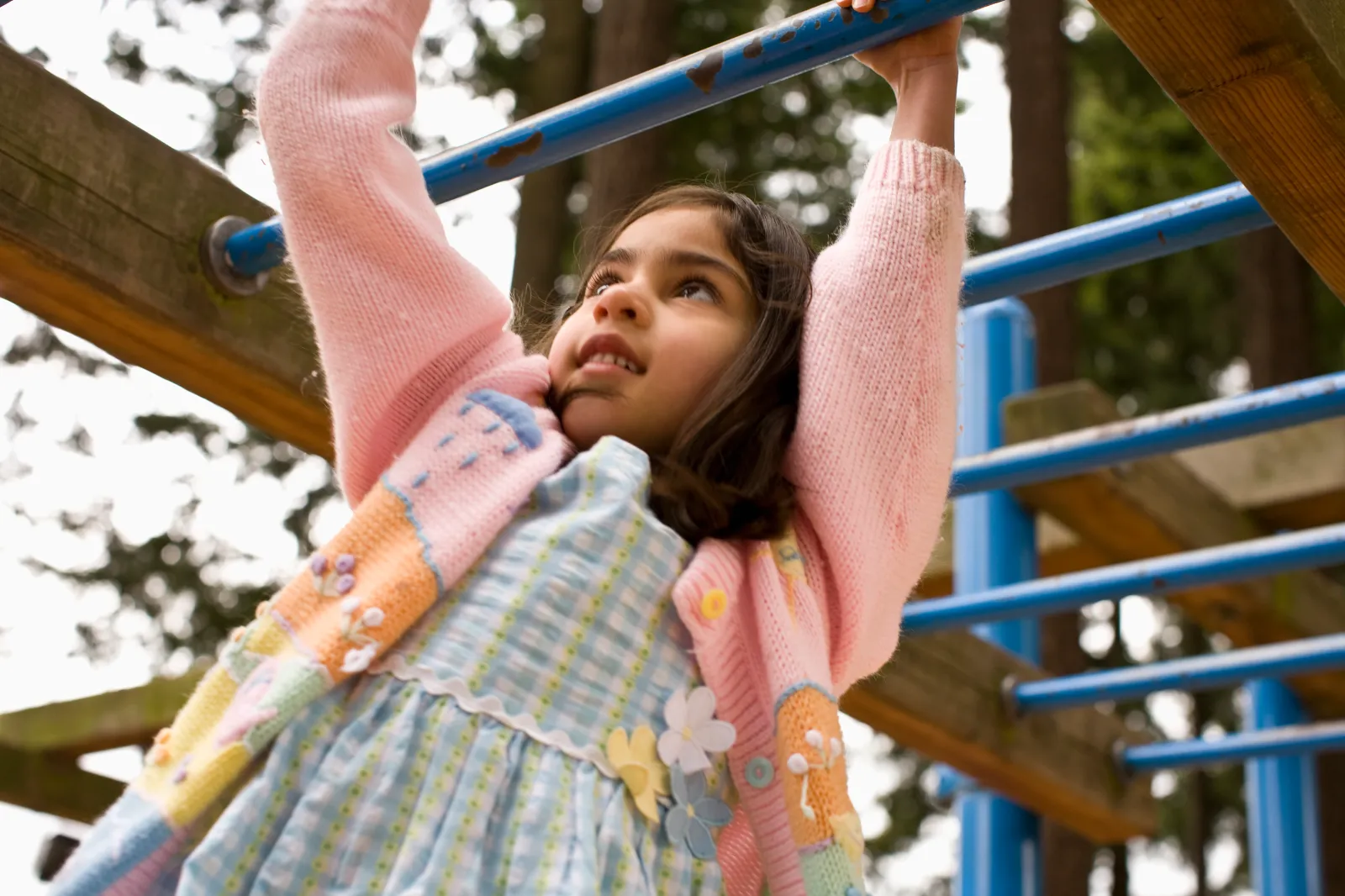
On a typical day, most parents said their child takes part in active play such as running, jumping or climbing (88 percent) and make-believe or pretend play (68 percent). More than half also reported that their child plays with puzzles, blocks or other toys that build fine-motor and problem-solving skills.
Yet the survey also highlighted how digital activities have become part of many children’s daily routines. Most parents of preschoolers—and nearly half of parents of toddlers—admitted that they often hand a phone or tablet to their child in the car, at restaurants or in public places when they would like them to be occupied.
While phones and tablets are convenient, Clark suggested some other options: “Parents can set up a quiet kit in the car or near their home office, with age-appropriate and easy-to-hold books, dolls or stuffed animals and small objects like blocks or puzzles—this approach gives parents a convenient way to offer other options.”
While most parents said their children play outside daily or several times a week, nine percent reported outdoor play happening only once a week or less—far below expert recommendations for early childhood development.
Parental anxiety appears to play a role. Four in 10 parents said they feel nervous when their child ventures “too far” or climbs “too high.”
Three-quarters of parents of 3- to 5-year-olds said their children use swings on their own, and 41 percent said their child can cross monkey bars unaided—but nearly half said they still hold their child’s hand or stand next to them during new challenges.
Clark said that while safety concerns are understandable, a little independence helps children grow.
“Play doesn’t need to be perfect or educational to be beneficial,” Clark concluded. “Letting children lead their own play encourages curiosity, creativity and independence. Parents just need to create time and space for their children to play freely.”
Do you have a tip on a science story that Newsweek should be covering? Do you have a question about play? Let us know via science@newsweek.com.
View 0 Comments
Submit Correction
View Editorial & AI Guidelines