...

By Hugh Cameron
Reporter
0
Share
Newsweek is a Trust Project member
See more of our trusted coverage when you search.Prefer Newsweek on Googleto see more of our trusted coverage when you search.
Cattle farmers and agricultural groups are voicing opposition to President Donald Trump’s plan to import Argentine beef in an effort to address record-high prices.
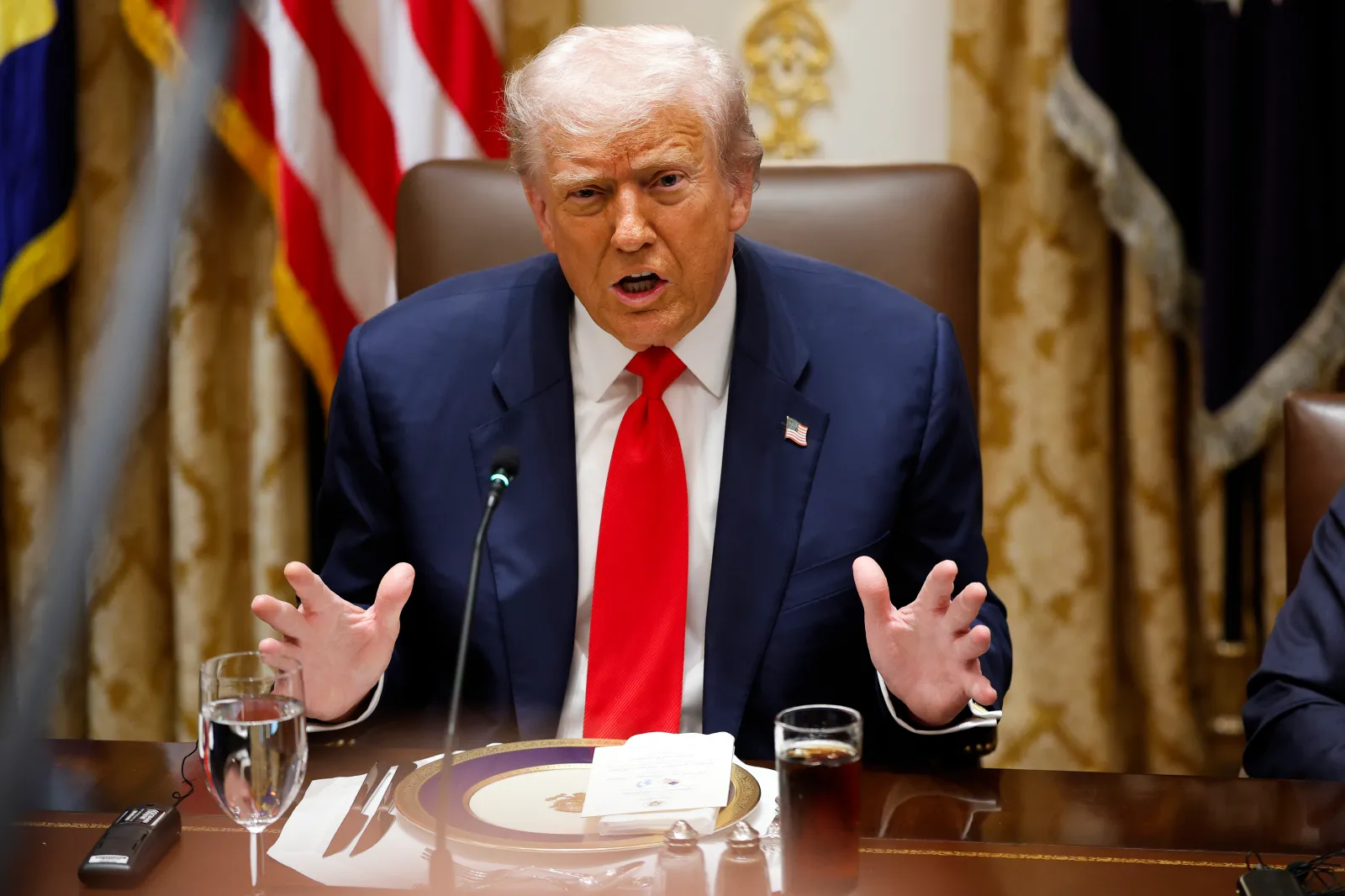
Trump said he was exploring the option on Sunday while aboard Air Force One, defending it as a means of assisting Argentina's struggling economy and President Javier Milei.
"I'm appalled President Trump, who campaigned on how he loved farmers, is putting America's farmers out of business by helping Argentina farmers first," said John Boyd, a cattle and crop farmer and founder of the National Black Farmers Association.
Read More on Politics
"Trump set us up and sold us out," he told Newsweek.
Newsweek contacted the White House for comment on Monday.
Why It Matters
Trump enjoyed immense popularity with farmers before his victory in the 2024 election, going on to win over three-quarters of farming-dependent counties according to Investigate Midwest. However, the struggling industry has increasingly expressed frustration with the administration over its trade and immigration policies. More recently, soybean croppers were angered by the financial support lent to Argentina, which went on to ship large quantities of its own soybeans to China. Some see the proposed beef deal as another instance of Trump placing the interests of a foreign political ally over America’s own agricultural sector.
...
As for beef prices, which have soared to record highs as diminished cattle herds fail to match high American demand, experts question whether Argentine imports—even at substantial levels—will be able to make a dent in the domestic shortfall.
What To Know
Several trade organizations representing cattle producers have issued critical responses to Trump’s proposal.
The National Cattlemen’s Beef Association (NCBA), which advocates for ranchers and promotes beef consumption, warned that expanding Argentina’s access to the U.S. market "harms American cattlemen and women, while also interfering with the free market."
"NCBA’s family farmers and ranchers have numerous concerns with importing more Argentine beef to lower prices for consumers," said NCBA CEO Colin Woodall. "This plan only creates chaos at a critical time of the year for American cattle producers, while doing nothing to lower grocery store prices."
Justin Tupper, president of the U.S. Cattlemen’s Association (USCA), said that artificially increasing the already growing reliance on foreign beef "weakens our industry’s foundation and undermines rural America."
In an interview with Newsweek, Tupper said that, far from a solution to rising beef costs, high levels of imports are "part of the problem."
"We raise some of the safest, best protein on the planet," he said. "And a lot of those countries, Brazil, Argentina, they don't have the same safety protocols as we do."
Tupper added that the move would only serve to benefit the "Big Four" meatpackers, who "buy it way cheaper in those countries and bring it over here and sell it to our consumers for a lot more money."

...
Boyd, who owns a 1,600-acre farm in Virginia, considers the proposal particularly insulting given the administration’s efforts to increase financial aid for Argentina to $40 billion, following the country announcing that its central bank had formalized a $20 billion currency swap line with the U.S. "40 Billion to Argentina, the president has become a Quisling," Boyd said, referencing the Norwegian Nazi collaborator whose name has become a widely used insult implying cowardice and betrayal.
However, others were more sympathetic to Trump’s motivations. In a statement shared with Newsweek, Meat Institute President and CEO Julie Anna Potts saying that she "appreciate[s] the President’s concern and willingness to take action to ensure Americans continue to have access to the most affordable beef in the world."
However, experts doubt whether the still unconfirmed deal could actually lower prices for the U.S. consumer.
"It is hard to imagine any deal the president and his administration can finalize will really impact beef and cattle prices," said Andrew Griffith, professor of Agricultural and Resource Economics at the University of Tennessee. "It is going to take two to three years to change domestic beef production and put more high quality cuts on the meat counter."
Agricultural economist Derrell Peel believes Argentina’s production capacity is well below what is needed to stabilize prices in the U.S, and that even doubling imports from current levels would have "a negligible impact on the total supply of beef in the U.S. market."
"In fact, if the U.S. took all of the projected 2025 Argentine beef exports, if would represent less than 2.5 percent of total U.S. beef supply," he told Newsweek.
Colin A. Carter, a professor of Agricultural and Resource Economics at the University of California, Davis, noted that America imports far more beef from countries such as Brazil and Australia, and believes the "best solution" would be to lower the tariffs currently imposed on these nations.
"Argentina has not been a significant supplier of beef to the U.S." he told Newsweek. "It makes no sense to impose tariffs on reliable and traditional foreign suppliers and then bring in beef from a non-traditional supplier whose costs would be higher."
What People Are Saying
President Trump, in response to a female reporter asking how farmers will feel about his proposal, said: "Argentina is fighting for its life, young lady. You don’t know anything about it. They’re fighting for their life. Nothing is benefiting Argentina.
"They’re fighting for their life. You understand what that means? They have no money. They have no anything. They’re fighting so hard to survive. If I can help them survive in a free world—I happen to like the president of Argentina. I think he’s trying to do the best he can. But don’t make it sound like they’re doing great. They are dying. All right? They’re dying."
Republican Representative Thomas Massie, via X: "This is not America first! We don’t need the U.S. flooded with beef from Argentina after our cattle ranchers have taken a beating over the last several years."
John Boyd, farmer and founder of the National Black Farmers Association, told Newsweek: "We are at an all-time low for beef production in the United States and Trump is helping Argentina cattlemen first. I hope farmers have learned a lesson: You can't trust Trump."
USCA President Justin Tupper told Newsweek: "I think we need to gather all the facts, find out exactly what it is they intend to do, and then we need to get a sit-down with the administration or the president and explain that the hard-working ranchers in my part of the world and all across the country support U.S. beef."
What Happens Next
The administration has not yet confirmed that it will be buying Argentina’s beef to address to rising prices.
On Sunday, the president said the U.S. could purchase "some beef" from the country, adding that this would help "a very good ally" in Argentina.
Read Newsweek’s conversation with Professor Andrew Griffith below
Would a deal with Argentina help to reduce the domestic cost of beef for consumers?
A deal with Argentina means some type of trade deal that would allow U.S. beef importers to begin importing beef from Argentina at a tariff rate that is advantageous compared to other beef import sources. The U.S. imports beef primarily from Australia, Canada, Mexico, New Zealand, and Brazil. Brazil would like to send more, but the fact there is no official trade agreement with Brazil on beef means they face a 76.4 percent tariff rate under the current situation. The type of deal President Trump has in mind is not yet detailed to the public so it is difficult to know if it will reduce the cost to beef consumers. Another aspect to note is that most of the beef coming from Argentina would fall in the lean grinding beef category. U.S. beef imports are primarily lean grinding beef and are largely mixed with domestic fat trimmings. Thus, this could have an impact on ground beef products, but it is not going to do much to change the price of higher valued cuts where quality grade is more important.
How might America’s beef farmers respond to this deal?
American beef cattle farmers are not going to be thrilled with this idea, but at the same time they are unlikely to invest much time or effort into thinking that much about it. The only way it gets a lot of play with producers is if it impacts cattle prices. It is hard to imagine any deal the President and his administration can finalize will really impact beef and cattle prices. It is going to take two to three years to change domestic beef production and put more high quality cuts on the meat counter. That is what will influence beef prices.
What support would U.S. cattle farmers and beef producers need from the administration?
Producers do not need government intervention. It is amazing how successful the cattle industry in this country has been for many decades without the government intervening. The best thing for the industry as it relates to this specific topic is for the government to stay out of the way, because the market will do its job. High prices will cure high prices. In the meantime, domestic cattle producers will enjoy the rewards of high prices until they are not so high.
View 0 Comments
Submit Correction
View Editorial & AI Guidelines