10
Loading video...

By Andrew Stanton
Reporter
0
Share
Newsweek is a Trust Project member
See more of our trusted coverage when you search.Prefer Newsweek on Googleto see more of our trusted coverage when you search.
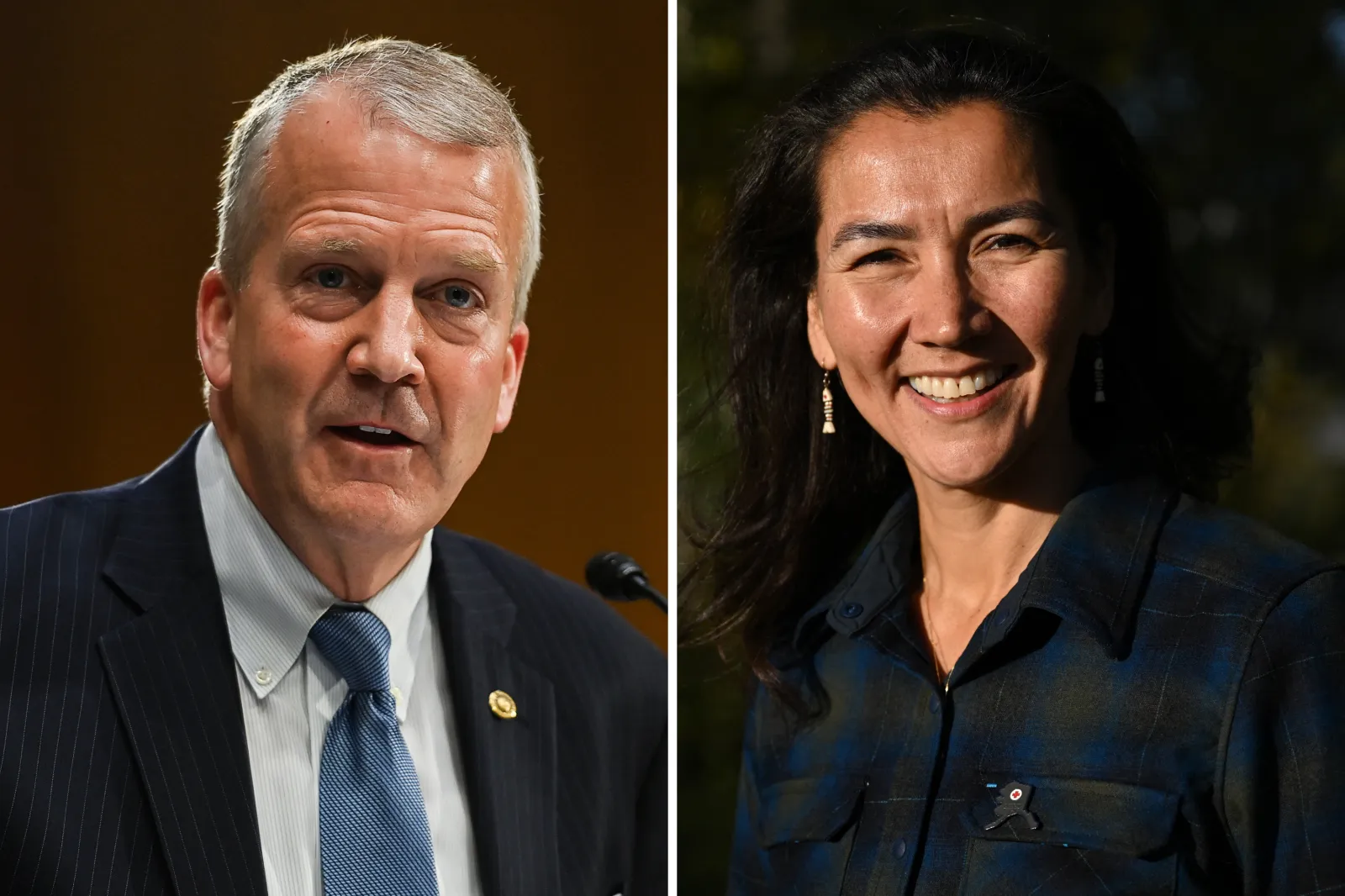
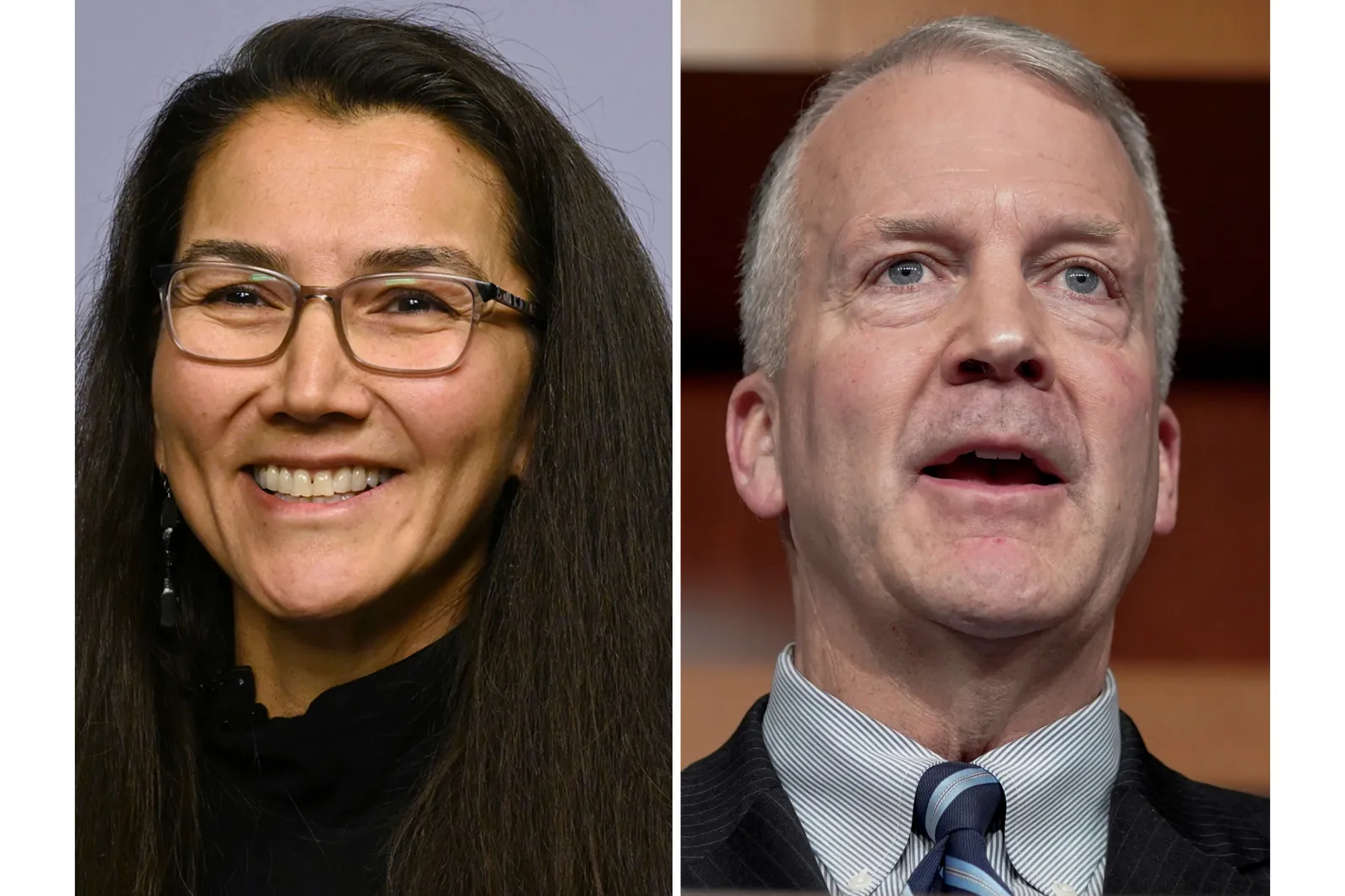
Republican Senator Dan Sullivan and former Representative Mary Peltola, a Democrat, advanced to the general election in Alaska’s Senate race on Tuesday in what is expected to be one of the most competitive elections of the 2026 midterms.
Peltola was leading early Wednesday with 47.8 percent of the vote to Sullivan's 43.3 percent, according to the Associated Press, with just under 80 percent of votes counted. Another Republican called Dan Sullivan (on the ballot as "Daniel J. Sullivan Jr.") was leading the rest of the crowded field of candidates, with 2.5 percent of the vote.
In Alaska, all candidates appear on a single ballot regardless of party, and the four with the most support advance to the general election.
Read More on Politics
The state also uses ranked choice voting in the general election. In November, voters will rank the four candidates by preference. If no candidate reaches an outright majority, the candidate with the fewest votes is eliminated, and their voters are redistributed based on their second choice. If no candidate again wins 50 percent plus one, the process repeats between the final two candidates.
Although Alaska has historically leaned toward Republicans, the Senate race has emerged as a top target for Democrats, who believe it could be the tipping-point state that determines which party controls the Senate after the midterms.
Democrats view the race as competitive because Republicans have seen narrowing margins in Alaska, and Peltola is a well-known candidate who has recently won statewide. President Donald Trump’s approval rating has also slipped nationwide amid cost-of-living and inflation concerns. However, Trump still won the state by 13 points in 2024, making it a tough state for any Democrat.
...
Mary Peltola vs. Dan Sullivan: What Polls Show
The latest poll from Data for Progress pointed to a competitive race between Sullivan, who has represented the state since 2015, and Peltola, who served in the at-large congressional district from 2022 to 2025.
In the first round of voting, no candidate received an outright majority, with 47 percent saying they would vote for Peltola compared to 41 percent for Sullivan.
Four percent said they would vote for another man named Dan Sullivan, a former U.S. Forest Service employee who has no relation to the incumbent. His candidacy has sparked outcry from Republicans, including Trump, who called him an “imposter” in a Tuesday post on Truth Social.
Three percent said they would vote for Gerald Heikes, another Republican candidate, while 5 percent were undecided.
In the final round of ranked-choice voting, however, Peltola led Sullivan by 6 points, 53 percent to 47 percent, according to the poll. It surveyed 605 likely voters in Alaska from July 28 to August 4, 2026 and had a margin of error of plus or minus 4 percentage points.
Nate Silver wrote Tuesday on X that Peltola is “slightly ahead” in his average of polling in Alaska.
"Mix of polls here is a bit D-leaning; model had been heavily anchored on the NYT poll that had Sullivan leading, but it thinks there's now enough evidence to outweigh that,” he wrote.
Other polls have similarly shown tight races.
The latest survey from Alaska Survey Research, which polled only the final round of ranked choice, found Peltola with a narrow lead over Sullivan, 50.8 percent to 49.2 percent. It surveyed 1,371 likely voters from August 2 to 5, 2026, with a margin of error of plus or minus 3 percentage points.
A March poll from Alaska Survey Research of the final round of ranked choice voting showed Peltola up by more than 4 points, 52.4 percent to 47.6 percent. An April release from the pollster showed her winning with 50.2 percent, to Sullivan’s 43.6 percent.
Another recent poll from The New York Times and Siena University found Sullivan with a 2-point lead over Peltola, 47 percent to 45 percent. Five percent were undecided, while 2 percent said they would vote for other candidates. It did not survey the final round of ranked voting, so it is not clear how those voters would break.
It surveyed 593 likely voters June 15-29. The margin of error among the likely electorate was plus or minus 4.9 percentage points, and plus or minus 5.4 points “for the sample of completed interviews.”
Joseph Warren, a professor of political science at the University of Alaska Anchorage, told Newsweek on Monday that the race is “definitely competitive,” but that Alaska is a tough state to poll.
“It’s notable that Alaska is a geographically vast, diverse state, and so polling is difficult. There was a polling error in 2020 when Senator Sullivan was reelected,” he said. “But certainly both political parties are spending money on the state.”
“I wouldn’t describe Alaska as a really ideologically conservative state. Rather, Alaskans have particular concerns around environmental management and resource developments that have traditionally benefited Republicans,” he said.
Peltola, in her prior elections, tried to separate herself from the national Democratic brand on issues like oil development, he said.
Related Story
Alaska Was Safe Trump Territory. Now Republicans Are on Defense
What Do Prediction Markets Show?
On Wednesday morning, Kalshi showed Sullivan with a 48 percent chance of winning and Peltola a 54 percent chance. On Polymarket, Sullivan’s chances stood at 47 percent and Peltola’s at 52 percent.
Prediction markets allow traders to buy and sell contracts tied to political outcomes and current events, aggregating real‑money wagers into probability estimates. Prices fluctuate as traders react to polling, fundraising, candidate developments and broader political trends. They measure trader sentiment at a given moment but do not always accurately predict the future.
Alaska’s Independent Streak
Alaska sometimes looks more conservative than it really is, according to Warren.
“I wouldn’t describe Alaska as a really ideologically conservative state. Rather, Alaskans have particular concerns around environmental management and resource developments that have traditionally benefited Republicans,” he said.
Peltola, in her prior elections, tried to separate herself from the national Democratic brand on issues like oil development, he said.
These local issues could be important in the Senate race, he said. Particularly, Alaska’s fisheries have been struggling as salmon runs decline, and that is a major issue for the state.
“In Alaska, people are talking a lot about fish, and in particular about trawling in the Bering Sea. It’s highly controversial. It’s not an issue that’s really a left-right issue. It doesn’t map onto conventional ideological categories of the two major parties or what you might get in the lower 48,” he said. “Exactly how that plays out is going to have a big impact on the race.”
Its politics are a bit different from other states. For instance, its state Senate has a majority coalition made up of Democrats and moderate Republicans. Alaska’s other Republican senator, Lisa Murkowski, is also known as one of the chamber's most centrist legislators and has been willing to break with her party on key issues.
Still, Alaska has a reliably Republican advantage—though margins have tightened in the Trump era.
Trump carried Alaska by 13 points in 2024, 10 points in 2020 and 15 points in 2016. Republicans also won Alaska by 14 points in 2012, nearly 22 points in 2008, 26 points in 2004 and 31 points in 2000.
As of August 3, Alaska had 141,995 registered Republicans and 69,889 registered Democrats. However, 81,801 nonpartisan and 298,273 unaffiliated voters made up the largest voting bloc in the state, according to the Alaska Division of Elections.
When Did Alaska Last Elect a Democratic Senator?
Even as the state voted Republican for president in 2008, it backed Democrat Mark Begich in the Senate race, though he lost to Sullivan six years later. Republicans have consistently won in the state ever since.
Alaska Is High-Stakes Race for Senate Control
Alaska could be the tipping-point state, meaning it could determine which party wins a Senate majority.
Republicans currently hold a 53-47 majority, so Democrats must flip four seats to take control, as Vice President JD Vance would serve as the tie-breaker in a 50-50 Senate.
Democrats are defending seats in two states Trump won in 2024: Georgia, where Democratic Senator Jon Ossoff has led polls against Republican Representative Mike Collins, and Michigan, where progressive Democrat Abdul El-Sayed and Republican former Representative Mike Rogers recently won their primaries.
Maine and North Carolina are Democrats’ top flip opportunities. In Maine, which Harris won by about 7 points, longtime GOP Senator Susan Collins is up for reelection in a state that leans Democratic, but she has won in the past because of her moderate image and personal popularity. She faces Democrat Troy Jackson, the former Maine Senate president.
In North Carolina, which Trump won by about 3 points, former Governor Roy Cooper, a Democrat, has built a polling lead against Michael Whatley, the former chair of the Republican National Committee. Republican Senator Thom Tillis is retiring.
However, a central challenge for Democrats is that those are the only GOP-held seats up for grabs in states Trump won by single digits or outright lost in 2024. So even if Democrats win all of those races, Republicans would still have a 51-49 majority next year. This means Democrats must flip at least two seats in double-digit Trump 2024 states to have a chance of winning a Senate majority.
Democrats view Alaska, Iowa, Ohio and Texas as being potentially competitive. If Democrats flip Alaska, they will need only one of those states to win a majority.
What Happens Next
With the primary all but wrapped up, candidates will spend the coming months making their cases to voters in Alaska as it remains one of the most hotly contested races of the midterms. Forecasters like the Cook Political Report and Sabato’s Crystal Ball view the race as a pure toss-up, with both leading candidates having a chance of winning in November.
Contact Newsweek editors on this story: Jason Lemon and Sam Wilson.
View 0 Comments
Submit Correction
View Editorial & AI Guidelines