
By Seren Morris
Freelance SEO Writer
0
Share
Newsweek is a Trust Project member
See more of our trusted coverage when you search.Prefer Newsweek on Googleto see more of our trusted coverage when you search.
The atomic bombings of Hiroshima and Nagasaki took place 75 years ago, on August 6 and August 9, 1945, respectively.
The U.S. bombed Japan towards the end of the Second World War, prompting the Japanese to surrender on August 15, 1945, bringing the conflict to an end.
The first atomic bomb—known as "Little Boy"—was dropped on Hiroshima by a modified B-29 bomber christened Enola Gay, after the mother of its pilot, Colonel Paul Tibbets.
Read More
Nuclear War Using Less Than 1 Percent of World’s Arsenal Would Cause Global Food Crisis ‘Unmatched in Modern History’6 min read

Cold War Nuclear Bomb Tests Altered Rainfall Patterns Thousands of Miles Away3 min read

Russia Says New U.S. Weapon Makes Nuclear War More Likely—But May Have 2,000 of Its Own7 min read

The 9,000-pound uranium-235 bomb was dropped at 8.15 a.m local time, exploding 2,000 feet above Hiroshima. The blast was equal to 12-15,000 tons of TNT and destroyed five square miles of the city.
Three days later, a plutonium bomb known as "Fat Man" was loaded on a B-29 bomber called Bockscar, which was flown by Major Charles Sweeney. The initial target was the city of Kokura, but because of thick clouds, the bomb was dropped on the secondary target of Nagasaki.
This second bomb weighed nearly 10,000 pounds and produced a 22-kiloton blast.
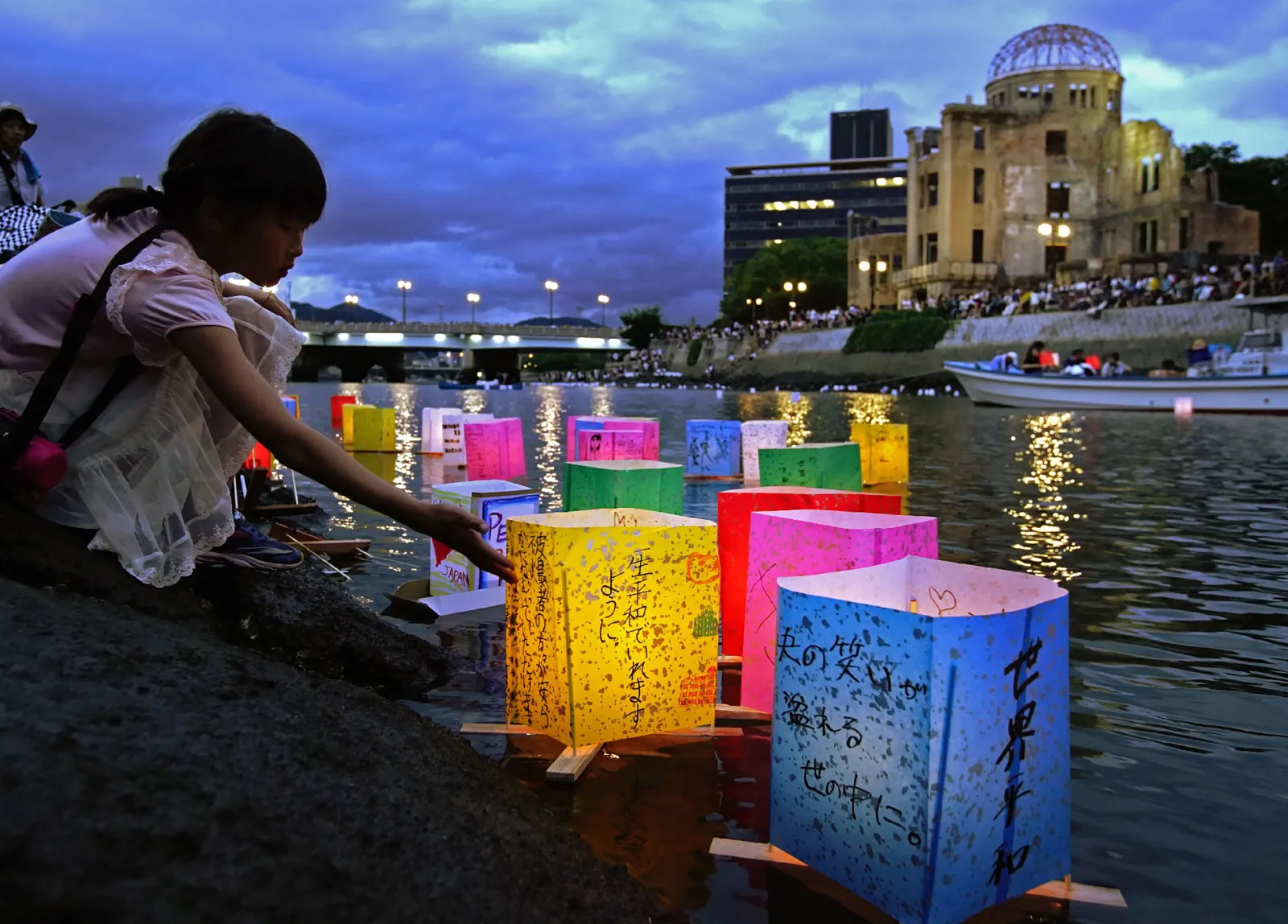
...
How Many People Died in Hiroshima and Nagasaki?
It is estimated that around 140,000 of Hiroshima's population of 350,000 were killed in the bombing, and it is estimated that around 74,000 people died in Nagasaki.
In Hiroshima, on August 6, around 80,000 people were killed immediately when the bomb was dropped. In Nagasaki, on August 9, around 40,000 people were killed instantly. Tens of thousands of others died in the aftermath, of radiation poisoning and their injuries.
However, due to the massive destruction of the cities, the recorded death tolls are estimates, with other studies saying 66,000 people died in the Hiroshima bombing and that 39,000 people died in the Nagasaki bombing.
Many victims died years later, as a result of cancer and other illnesses linked to radiation poisoning caused by the bombings. A 1998 study found that around an additional 62,000 people in Hiroshima had died as a result of the bomb, bringing the total number of victims to more than 200,000.
Following the two bombings, Japan surrendered on August 15, which Emperor Hirohito announced in a radio broadcast. "Victory in Japan" or "V-J Day" celebrations took place across the country. Then, on September 2, the formal surrender agreement was signed aboard the U.S. battleship Missouri, anchored in Tokyo Bay.
This year, Japanese Prime Minister Abe Shinzo will attend ceremonies marking the 75th anniversary of the bombings, in Hiroshima on Thursday and in Nagasaki on Sunday.
Abe said Japan will work to achieve a world without nuclear weapons and is committed to its three principles of not producing, possessing or allowing nuclear arms on its territory.
The prime minister also pledged to continue implementing support measures for atomic-bomb survivors.
View 0 Comments
Submit Correction
View Editorial & AI Guidelines