...

By Micah McCartney
Reporter
0
Share
Newsweek is a Trust Project member
See more of our trusted coverage when you search.Prefer Newsweek on Googleto see more of our trusted coverage when you search.
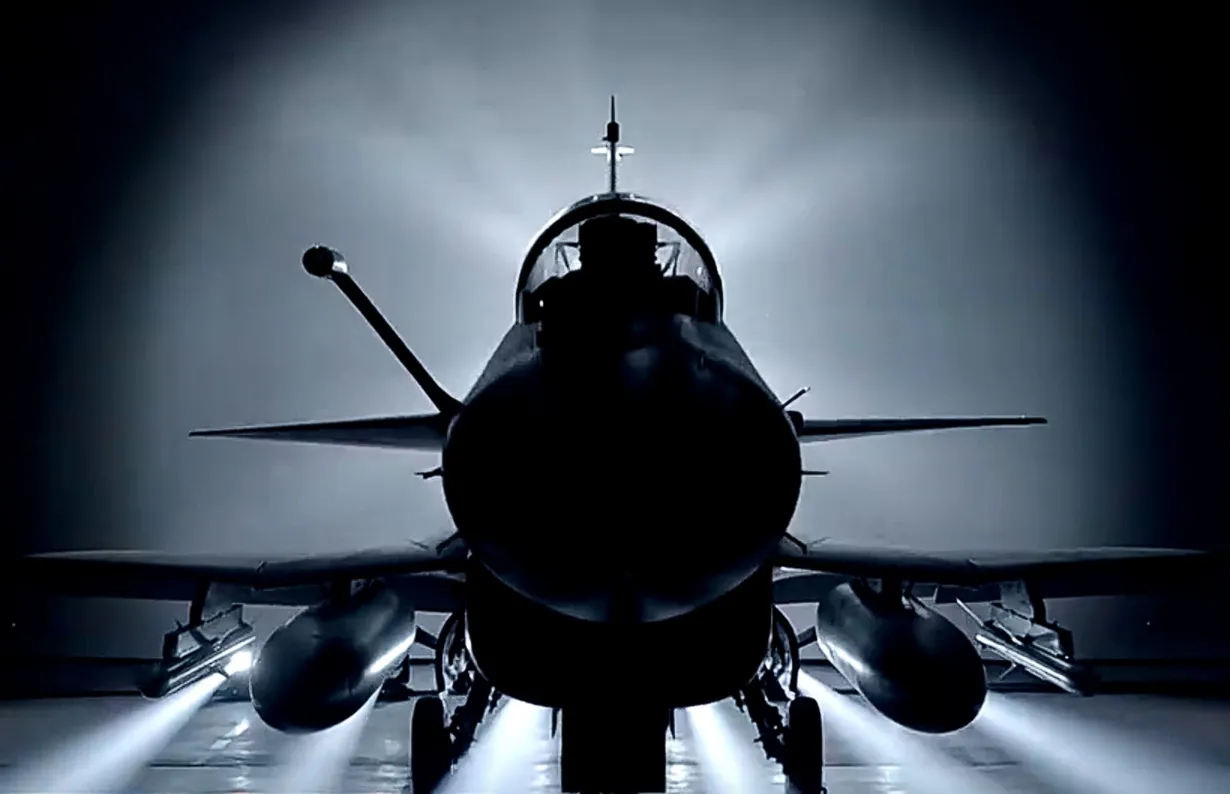
Chinese state media released a report promoting the Chengdu J-10 in what could be part of broader efforts to market the multirole fighter jet to foreign buyers.
Why It Matters
China has leveraged its rapidly expanding defense industry to become the world’s fourth-largest arms exporter, selling drones, fighter jets, and missiles to nearly four dozen countries, according to the Stockholm International Peace Research Institute.
Read More on World
As more advanced Chinese warplanes, such as the J-20 stealth fighter, take center stage in the People’s Liberation Army (PLA), the profile of the fourth-generation J-10C has risen abroad. Pakistan, China’s closest military partner and currently the only foreign operator of the aircraft, claims its J-10Cs shot down Indian fighters during the archrivals' five-day conflict in May. Other countries are reportedly pursuing the supersonic fighter.
Newsweek reached out to the Chinese Ministry of Foreign Affairs via email for comment outside of office hours.
What To Know
In an interview released Monday by state broadcaster China Central Television, the J-10C’s chief designer praised the aircraft’s expanded weapons-carrying capability. The fighter, which entered PLA service in 2017, can be outfitted with more than 40 types of weaponry, up from just 10 on the original J-10, offering greater flexibility for air, ground, and maritime missions.
In terms of airframe design, the J-10C benefits from a “bump” air intake system that improves airflow to the engine, enhances reliability, and reduces its radar cross-section, Wang observed.
Meanwhile, the jet’s forward-mounted canards—small wing-like control surfaces—boost stability and maneuverability at high speeds, giving it an edge over Pakistan’s JF-17 fighters, also built by Chengdu, and putting it on par with U.S.-made F-16s in the South Asian country’s fleet.
...
One of the most significant upgrades is the aircraft’s active electronically scanned array radar, which replaces older mechanically scanned systems, Wang pointed out. AESA radars enable faster target detection and tracking, allowing pilots to engage multiple enemies simultaneously while being more difficult to jam or detect.
The fighter is also equipped with advanced electronic warfare systems that improve the pilot’s situational awareness and reduce the chance of revealing the aircraft’s position to enemy radars.
The aircraft generated buzz in May after Pakistan claimed its J-10Cs shot down Indian aircraft, including French-built Rafales. India denied the claim, and Dassault Aviation CEO Éric Trappier said a single Rafale was lost due to a technical malfunction, according to French news outlet Avion De Chasse.
What People Are Saying
Jiang Bin, spokesman for China’s Ministry of National Defense, said in July that China was ready to “share the achievements of its equipment development with friendly countries," without sharing further details.
Zhang Xuefeng, a Chinese military affairs commentator, was cited by state media outlet the Global Times in May: “In the past, when people talked about Chinese fighter jets, the impression was mostly about their cost-effectiveness. But now, the J-10C has proven its true combat prowess through real-world operational experience.”
What Happens Next
Several countries are reported to be considering the J-10C, but it remains to be seen which will become the third nation to add the fighter to its fleet.
Unconfirmed reports have suggested Iran is in high-level talks to procure the aircraft following its brief conflict with Israel earlier this year. Indonesia’s foreign ministry has acknowledged it is weighing the purchase of 42 J-10Cs, as part of the Southeast Asian country's military modernization push.
View 0 Comments
Submit Correction
View Editorial & AI Guidelines